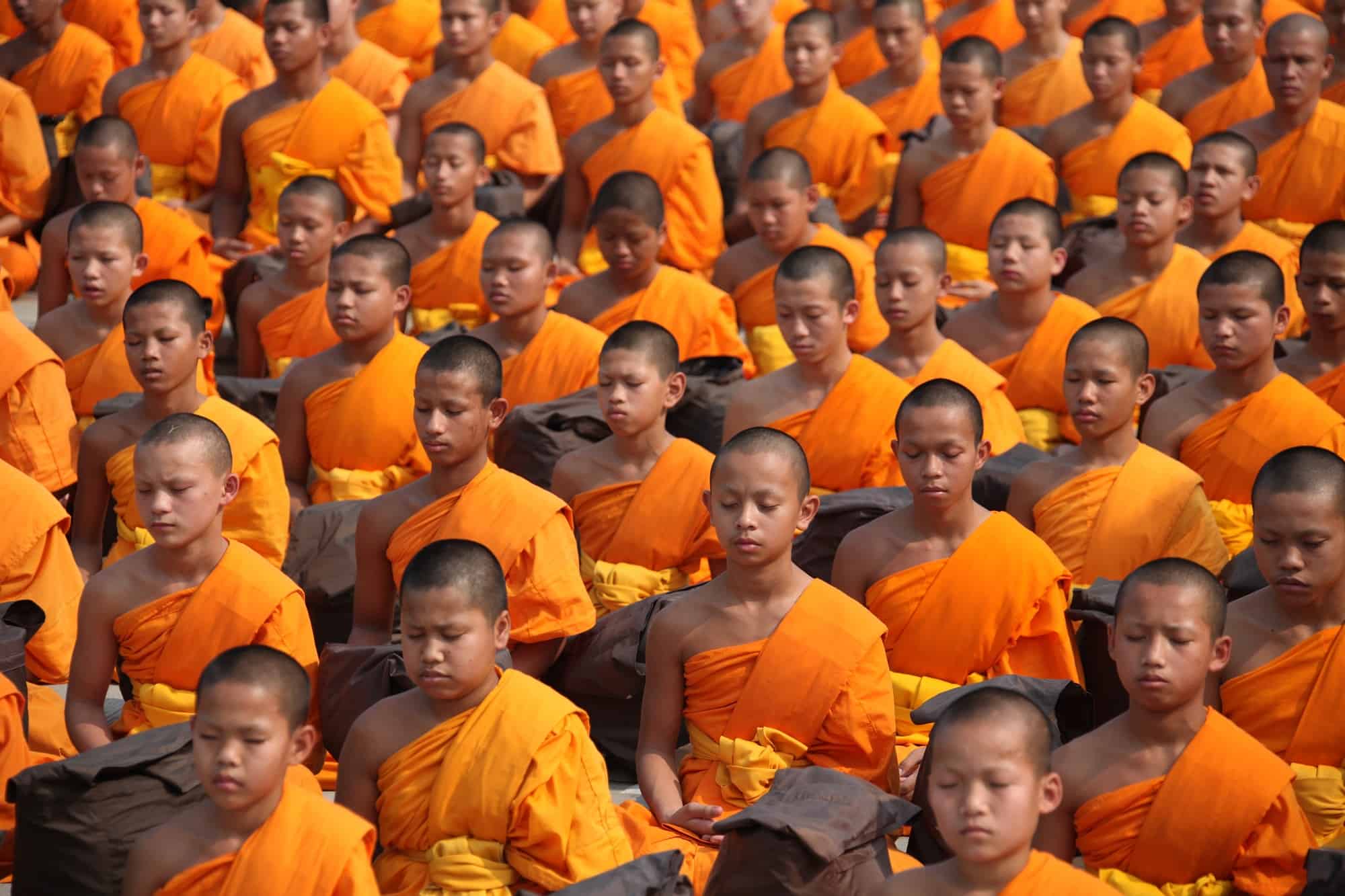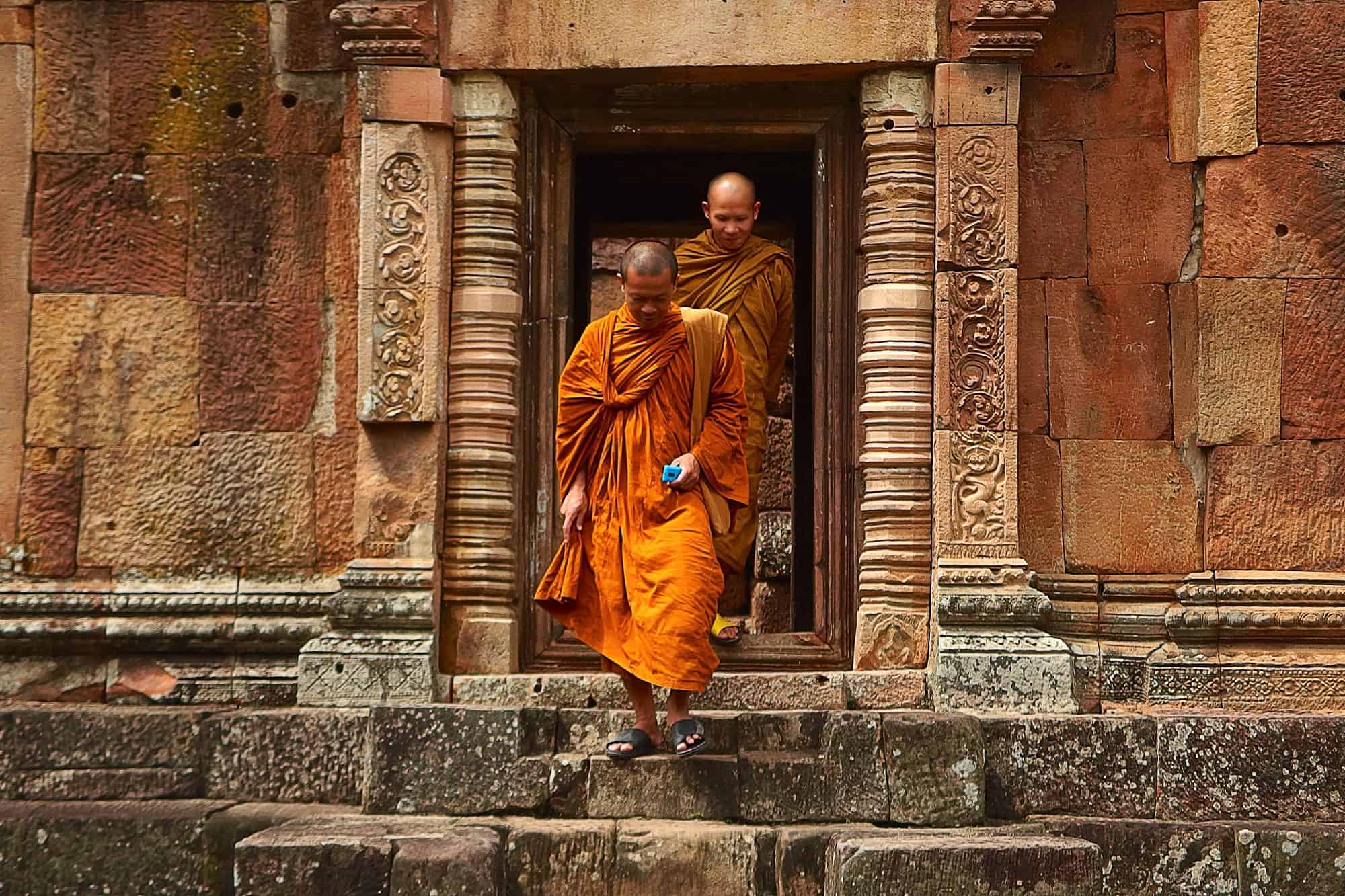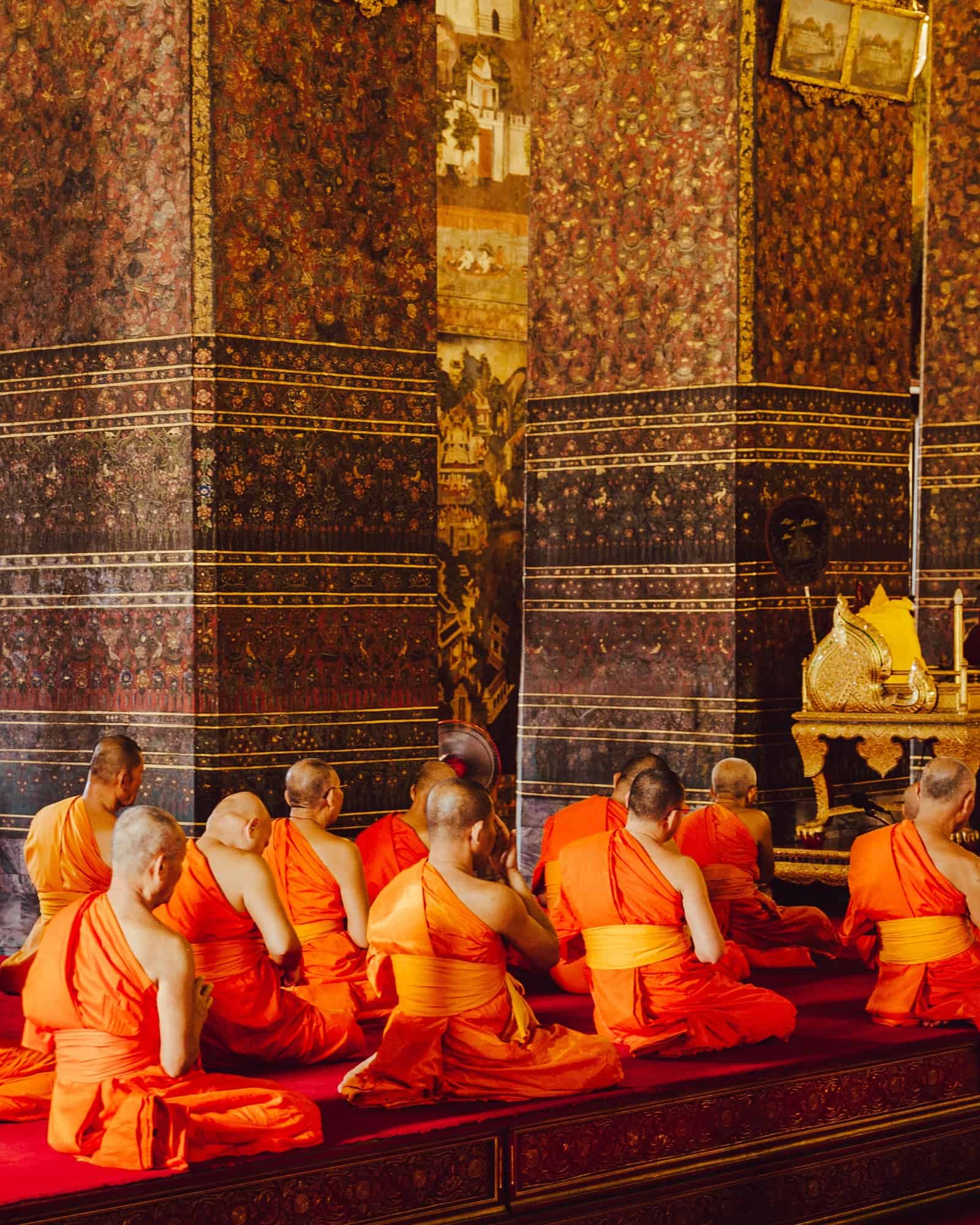
It’s 5:30am in Chiang Mai. The streets are quiet, the air smells of incense, and a line of saffron-robed monks moves barefoot through the early-morning mist. Locals kneel by the roadside to place sticky rice into their alms bowls. Nobody speaks. If you’ve travelled in Southeast Asia, you’ve almost certainly witnessed this scene — and wondered: why do Buddhist monks wear orange robes?
The short answer: orange was the colour that emerged from boiling discarded cloth with what was available — turmeric, jackfruit bark, and clay. That practical origin is now a 2,500-year-old spiritual tradition. But there’s a lot more to it than that.
Key Takeaways
- Monks’ orange robes trace back to the time of the historical Buddha (~500 BCE) when early ascetics dyed discarded cloth with natural pigments like turmeric
- The colour symbolises renunciation, the burning away of ego, and spiritual equality among monks
- Not all Buddhist monks wear orange — Tibetan monks wear maroon, Japanese Zen monks wear black or grey, and Sri Lankan forest monks wear golden yellow
- The robe is called a kasaya (or kāṣāya) and consists of three separate pieces
- The head-shaving tradition shares the same roots: removing ego, attachment, and vanity
- Chiang Mai, Thailand is one of the best places to see monks in their daily alms-giving ritual
The Historical Origins: Why Orange Specifically?
To understand why Theravada Buddhist monks wear saffron orange, you have to go back to the very beginning — to the wandering ascetics of ancient India around 500 BCE.
Early followers of the Buddha owned almost nothing. Their robes were stitched together from rags: cloth found discarded at rubbish heaps, roadside ditches, and even burial grounds. This practice, known in Pali as pamsakula (meaning “dust heap” or “rag robe”), was a deliberate act of renunciation. By wearing what nobody else wanted, monks signalled their detachment from material wealth.
The problem with rags is that they’re a patchwork of colours. To create uniformity — and to neutralise the visual reminder of where the cloth came from — monks boiled the fabric to dye it a single colour. The dyes available in tropical India and Southeast Asia were natural and cheap: turmeric root, jackfruit bark, mangosteen peel, and saffron spice. These pigments produced warm, earthy tones ranging from yellow to deep orange.
Orange became associated with the Theravada tradition in Sri Lanka, Thailand, Myanmar, Cambodia, and Laos. It stuck. Over 2,500 years later, monks in Bangkok and Luang Prabang still wear the same colour for the same reasons.
The Symbolism: What Does Orange Mean?
The practical origin only tells half the story. Over centuries, the saffron colour accumulated deep spiritual meaning:
Symbol of Renunciation
In both Hindu and Buddhist tradition, orange-saffron represents the letting go of worldly desires. A monk in orange signals to the community: I have renounced possessions, family ties, and social status. The uniform colour prevents status distinctions — a novice monk and a senior abbot wear essentially the same robe.
The Flame of the Dharma
Orange is the colour of fire. In Buddhist symbolism, it represents the dhamma (the Buddha’s teachings) burning away ignorance and delusion. Wearing orange is a living reminder of the path toward enlightenment.
Discouraging Vanity
Uniformity in dress was a deliberate choice. When all monks wear the same robe in the same colour, fashion becomes irrelevant. The kasaya is designed to prevent attachment to appearance — one of the more subtle expressions of the first precept against desire.
What Is the Kasaya? The Three-Piece Robe Explained
The monk’s robe has a proper name: the kasaya (Sanskrit: kāṣāya; Pali: kāsāva), named after the brownish-red dye used in ancient India. According to the Vinaya Pitaka — the section of the Buddhist scriptures governing monastic discipline — the kasaya consists of three pieces:
- Antarvasa — the inner robe worn around the waist, like a sarong
- Uttarasanga — the upper robe draped over the left shoulder, leaving the right shoulder bare
- Sanghati — the outer robe, worn for formal occasions and folded when not in use
The way a monk drapes and folds the robe is taught as part of monastic training. In Thailand, you’ll often see monks with one shoulder bare; in cooler climates, the sanghati covers both shoulders. The shimmering synthetic-dyed orange you see in Bangkok is a modern variation — traditional robes used natural dyes and had a more muted, earthy tone.
Not All Monks Wear Orange: Buddhist Robe Colors Around the World
If you’ve been to Tibet or Nepal, you may have noticed that monks there wear dark maroon, not orange. Buddhist monk robe colors vary significantly by tradition and geography:
| Tradition | Region | Robe Colour | Why? |
|---|---|---|---|
| Theravada | Thailand, Myanmar, Cambodia, Laos, Sri Lanka | Saffron orange | Natural dye tradition; urban Thailand uses brighter synthetic dye |
| Vajrayana (Tibetan) | Tibet, Nepal, Bhutan, Mongolia | Maroon / dark red | Different dye tradition using pigments available in the Himalayan region |
| Zen (Japanese) | Japan, Korea | Black, grey, or brown | Influenced by Chinese monastic tradition; subdued Zen aesthetics |
| Forest Tradition (Sri Lankan) | Sri Lanka, Thailand forest monasteries | Golden ochre / muted yellow | Purer adherence to original natural dye; avoids synthetic bright orange |
| Chinese Mahayana | China, Taiwan, Vietnam | Grey, brown, or gold | Chinese cultural aesthetics and distinct Mahayana textual tradition |
The robe colour difference between Theravada and Tibetan monks is not a theological split — it reflects geography, available dyes, and the historical development of each monastic tradition over 2,500 years.
Why Do Buddhist Monks Shave Their Heads?
The shaved head and the orange robe are two parts of the same statement. In the Vinaya Pitaka, shaving the head is called kesa-kamma (“hair-work”) and is mandatory upon ordination. The reasons mirror those for wearing the robe:
- Removing vanity — hair is one of the primary ways people signal status, attractiveness, and identity. Shaving it removes this entirely
- Equality — regardless of caste, race, or background, all monks look the same
- Renunciation of self — attachment to physical appearance is considered a form of ego in Buddhist practice; the act of shaving is a symbolic death of the old self
- Practicality — in tropical Southeast Asia, a shaved head is significantly cooler
Monks shave their heads (and often their eyebrows) every lunar fortnight. In Thailand, young men often ordain temporarily — for a week, a month, or a full rainy season (vassa) — and the act of shaving is part of the ordination ceremony, performed by a senior monk in front of the community.
If you’re travelling Myanmar, you’ll notice that ordination ceremonies are significant community celebrations, with the young man dressed in fine clothing before being robed in saffron for the first time.
Where to See Buddhist Monks in Southeast Asia
Seeing monks in their daily routine is one of the most memorable experiences Southeast Asia offers — but it requires some planning and a respectful approach.
Chiang Mai, Thailand
Chiang Mai is the cultural heart of Northern Thailand and one of the best places in the world to witness the monastic tradition. The city has over 300 temples, and the early-morning alms-giving (tak bat) ceremony takes place at around 6am on most streets.
The White Temple in Thailand (Wat Rong Khun) near Chiang Rai is perhaps the most visually striking Buddhist temple in the country — a brilliant-white contemporary structure that blends Buddhist imagery with modern art.
For the most immersive experience, a guided sunrise tour to Wat Phra That Doi Suthep — led by a former monk — lets you witness alms-giving at dawn and understand the daily rules of monastic life from someone who has lived them. The Doi Suthep Sunrise Tour with an ex-monk guide includes an alms-giving ceremony and breakfast at a temple — it’s the closest most visitors get to understanding what monks actually do before 8am.
If you want to participate in the alms-giving ritual yourself, the morning alms-giving tour at Doi Suthep walks you through the correct etiquette — including how to dress, how to kneel, and what offerings to bring.
Bangkok, Thailand
The off-the-beaten-track Bangkok experience often includes temple life. Wat Pho, Wat Arun, and the many neighbourhood temples host active monastic communities. Visit early morning or at dusk during evening prayers (tham wat).
Myanmar
Buddhism permeates every layer of life in Myanmar — an estimated 90% of the population identifies as Buddhist. Before travelling Myanmar, it’s worth understanding the current political situation, but culturally it remains one of the most devout Theravada Buddhist countries in the world.
Temple Etiquette: How to Behave Around Monks
- Women should not touch monks or hand them anything directly — place objects nearby for the monk to pick up
- Remove shoes before entering a temple
- Cover shoulders and knees (long trousers or skirt, plus sleeves)
- Never point your feet toward a monk or a Buddha statue
- Greet with the wai (hands pressed together) rather than a handshake
- Keep voices low; switch phones to silent
The Rules Monks Live By (And Why the Robe Matters)
Theravada monks follow 227 rules set out in the Vinaya Pitaka. Many directly relate to the robe:
- Monks must wear the complete three-piece kasaya when leaving the monastery
- The robe must be within arm’s reach at all times during sleep
- Monks may own a maximum of three robes
- Robes must be dyed in one of five permitted earth tones — specifically, not pure red, blue, yellow, green, or black
- Monks cannot accept or store money — meaning they cannot buy robes; they must be gifted by laypeople
This is why robe-donation ceremonies matter at Thai temples, particularly during Kathin (the robe-offering festival held after the three-month vassa retreat). The Thailand Lantern Festival (Yi Peng) falls near the end of vassa — the lanterns are released to celebrate the end of the monks’ retreat period.
Frequently Asked Questions
What do monk robe colors mean?
Monk robe colours represent the tradition and geographic region of each Buddhist school. Saffron orange = Theravada (Southeast Asia); maroon = Tibetan Vajrayana; black or grey = Zen (Japan/Korea); golden ochre = Sri Lankan forest monks. The colour was originally determined by available natural dyes, which later acquired symbolic meaning in each tradition.
Do monks wear orange robes?
Theravada Buddhist monks in Thailand, Myanmar, Cambodia, Laos, and Sri Lanka wear saffron orange robes. Tibetan monks wear maroon. Japanese Zen monks wear black or grey. “Monks wear orange” refers specifically to the Theravada tradition you’ll see across mainland Southeast Asia.
Why can’t monks touch females?
Theravada monks observe strict celibacy rules laid out in the Vinaya Pitaka. Physical contact with women — including handshakes — is prohibited to protect the monk’s celibacy vows and maintain community trust. This is not a rule about disrespect; it reflects a very old monastic code designed to prevent ambiguity about the monk’s intentions.
How long does someone need to be celibate to become a monk?
There’s no minimum period of prior celibacy required before ordination in Theravada Buddhism. In Thailand, temporary ordination is common — men ordain for a few weeks to a few months, then disrobe. The celibacy rule applies only while ordained. Full lifetime ordination involves a longer preparation process guided by a senior monk.
Why did the historical Buddha choose saffron?
The Buddha didn’t choose saffron specifically — orange emerged naturally from dyeing discarded rags with whatever was available in tropical India around 500 BCE: turmeric, jackfruit bark, and clay. The colour became standardised as the tradition spread through Sri Lanka and into Southeast Asia over the following centuries.
Final Thoughts
The orange robe is one of the most recognisable symbols in the world — and one of the oldest unchanged garments in human history. From the rag-robe ascetics of ancient India to the saffron-clad monks walking Bangkok’s alleyways before sunrise, the kasaya carries 2,500 years of meaning in every fold.
If you want to understand it properly, don’t just read about it. Go to Chiang Mai at 5:30am. Watch the tak bat in silence. If you can, join a sunrise tour at Doi Suthep with a knowledgeable guide who has lived it. That’s the education no article can fully give you.
Have you witnessed the tak bat ceremony or visited a Buddhist temple in Southeast Asia? Drop your experience in the comments below.