
Thailand certifies more PADI divers per year than almost any other single country, with Koh Tao alone issuing over 40,000 open-water certifications annually (PADI, 2024). I found that out after my third trip, when I finally asked the dive instructor who had guided me through the chimney at Sail Rock. By that point, I’d logged dives across three continents. Thailand still sat at the top of the list.
This guide covers everything you need to plan a diving trip in 2026: the best sites across both coasts, the exact seasonal window for each, what you’ll pay, how to get certified, and which spots suit beginners. Whether you’ve never put on a BCD or you’re chasing manta rays in the Andaman Sea, Thailand has a dive with your name on it.
Key Takeaways
- Thailand has two distinct dive seasons: Andaman Sea (Phuket, Similan Islands, Richelieu Rock) peaks November to April; Gulf of Thailand (Koh Tao, Sail Rock) peaks May to September.
- Koh Tao issues over 40,000 PADI certifications per year, making it one of the world’s top dive training destinations (PADI, 2024).
- A PADI Open Water course costs ฿9,500–฿14,000 (~$260–$390 USD); fun dives start from ฿3,500.
- Sail Rock is widely considered the best single dive site in the Gulf of Thailand, with a vertical chimney swim-through and schooling barracuda.
- The Similan Islands and Richelieu Rock are typically accessed by liveaboard from Khao Lak or Phuket.
Why Is Scuba Diving in Thailand So Good?
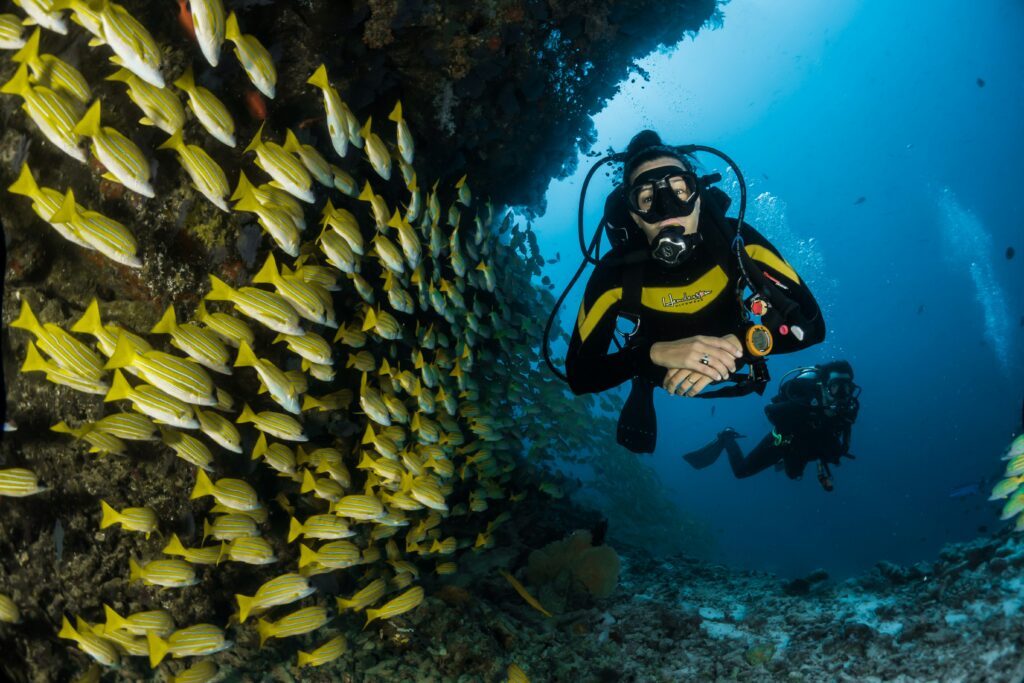
Thailand’s underwater appeal comes down to three things: warm, clear water, biodiversity, and accessibility. Water temperatures sit between 28–30°C year-round (PADI, 2024), making it comfortable for long dives with no drysuit required. Visibility regularly reaches 20–30 metres at the top sites, particularly around the Similan Islands in peak season.
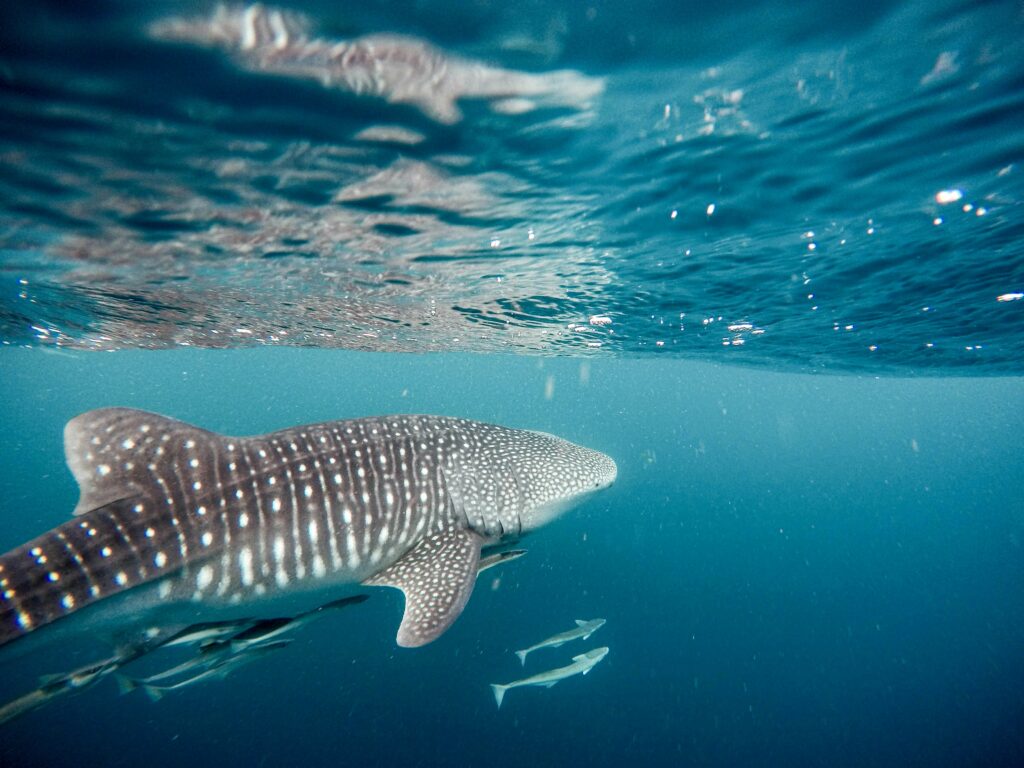
The marine life range is genuinely staggering. On a single week in Thailand I’ve logged whale sharks off the Chumphon Pinnacle at Koh Tao, manta rays at Hin Daeng, leopard sharks resting on sandy flats, and nudibranchs barely bigger than a fingernail. Few destinations offer that range in one trip.
The dive infrastructure is world-class and genuinely affordable. Dive centres cluster around every major hub, PADI and SSI certification courses run constantly, and the instructor quality at the better schools is excellent. Thailand attracts serious instructors because the diving is good enough to keep them there long-term. That depth of local knowledge makes a real difference in the water.
Top Dive Sites in Thailand
These are the sites that consistently deliver. Some suit all levels, others require certification and experience. They are split by diving zone below.
Andaman Sea Sites
The Similan Islands are the flagship Andaman dive destination. The archipelago spans nine islands with sites ranging from shallow coral gardens accessible to open-water divers to deep boulders and walls that reward advanced certifications. Visibility can exceed 30 metres in peak season. Whale sharks and manta rays pass through regularly between December and April. Most divers access the Similans via liveaboard from Khao Lak; day trips are possible but the sites are too far for casual day-tripping in rough sea conditions.
Richelieu Rock is a single horseshoe-shaped pinnacle about two hours from Khao Lak by boat. Most experienced divers in Thailand list it as the best dive site in the country. The rock is covered in purple soft coral, the walls are thick with fish life, and harlequin shrimp, frogfish, and ghost pipefish turn up regularly. Whale sharks are sighted here more reliably than almost anywhere else in the Andaman. Access is almost exclusively by liveaboard.
Hin Muang and Hin Daeng sit in the deep Andaman south of Koh Lanta. Hin Muang drops to over 60 metres and is the deepest reef in Thailand; Hin Daeng’s red coral walls are among the most photographed in the region. Manta rays aggregate at both sites during peak season. Day trips from Koh Lanta or Koh Phi Phi are the standard access route.
Hin Pusar (Elephant Head Rock) is a boulder site in the Similans with dramatic swim-throughs, arches, and channels. Leopard sharks and whitetip reef sharks rest between the boulders. It is one of the most structurally interesting dive sites in the archipelago.
Koh Phi Phi offers accessible reef diving from one of Thailand’s most visited islands. Bida Nok and Bida Nai have blacktip reef sharks, turtles, and strong coral cover. A few miles offshore, the King Cruiser wreck sits at 30 metres — a large vehicle ferry that sank in 1997 and is now heavily encrusted with coral and fish life.
The Surin Islands and Koh Lipe round out the Andaman options. The Surins are a remote national park with pristine hard coral reefs and occasional whale sharks; Koh Lipe is the southernmost accessible dive hub, with good year-round diving conditions and straightforward day-trip logistics.
Gulf of Thailand Sites
Koh Tao is the certification capital of Thailand and arguably the world. The island issues over 40,000 PADI certifications annually. Dive sites around the island range from protected bays with 5-metre visibility suitable for open-water training to deeper pinnacles for experienced divers. Chumphon Pinnacle, about 13km northwest of Koh Tao, is where whale sharks appear most reliably in the Gulf.
Sail Rock sits midway between Koh Tao and Koh Phangan and is widely considered the best single dive site in the Gulf of Thailand. The site features a vertical chimney swim-through that rises from 18 metres to the surface — one of the more memorable experiences in Thai diving. Above the chimney, large schools of barracuda and trevally hold position in the current. Whale sharks pass through regularly between April and September. Day trips run from both Koh Tao and Koh Phangan.
Best Time to Scuba Dive in Thailand
Thailand has year-round diving, but conditions vary significantly between the two coasts. The key factor is which monsoon is active. Getting the season right is the single most important planning decision for a Thailand dive trip.
Andaman Sea (West Coast): November to April
The Andaman Sea is at its best from November through April. This is when the northeast monsoon keeps the sea calm and visibility is consistently high. January to March is peak season: Similan Islands liveaboards are fully booked weeks in advance, and the chances of whale shark and manta ray encounters are at their highest.
From May to October, the southwest monsoon brings heavy swells and poor visibility to the Andaman. The Similan Islands National Park officially closes from mid-May to mid-October. Diving is possible at sheltered sites around Phuket and Krabi during this period, but the headline sites are effectively off the table.
Gulf of Thailand (East Coast): May to September
The Gulf of Thailand runs on the opposite monsoon cycle. When the Andaman is rough, the Gulf is calm. May through September is the peak window for Koh Tao, Sail Rock, and the Koh Samui area. Visibility at Sail Rock routinely exceeds 20 metres in the dry months.
The Gulf also offers year-round certification diving on Koh Tao, since the island is sheltered enough for training dives even during its wetter months (October and November are the roughest). Budget divers who can only travel in the Andaman low season will find Koh Tao a reliable fallback with consistently good conditions.
| Zone | Best Months | Key Sites |
|---|---|---|
| Andaman Sea | November–April | Similan Islands, Richelieu Rock, Hin Daeng/Hin Muang |
| Gulf of Thailand | May–September | Koh Tao, Sail Rock, Chumphon Pinnacle |
| Year-round | Any | Koh Tao (training), Phuket day sites, Koh Phi Phi |
Scuba Diving in Thailand Cost
Thailand is one of the most affordable serious dive destinations in the world. The prices below reflect standard rates at reputable centres on Koh Tao and Phuket as of 2026. Costs at higher-end liveaboard operators or resort dive centres will sit at the upper end of the range.
| Activity | Cost (THB) | Approx. USD |
|---|---|---|
| Fun dives (1 day / 2 dives) | ฿3,500–฿4,500 | ~$95–$125 |
| PADI Open Water course | ฿9,500–฿14,000 | ~$260–$390 |
| Advanced Open Water course | ฿8,000–฿12,000 | ~$220–$330 |
| Liveaboard (4 days / 4 nights) | ฿20,000–฿50,000+ | ~$550–$1,400+ |
| Equipment rental (per day) | ฿500–฿1,500 | ~$14–$42 |
Koh Tao consistently offers the lowest prices for certification courses — an Open Water qualification here costs roughly half what the same course runs in Europe or North America. Full equipment is available to rent at every dive centre, so there’s no need to travel with gear unless you prefer your own kit.
Liveaboard Diving in Thailand
The Similan Islands and Richelieu Rock are too far from shore for comfortable day trips. Liveaboards are the standard way to access them, and the format suits the diving well: early morning dives before day-trip boats arrive, multiple dives per day across different sites, and nights anchored in protected bays.
Most Andaman liveaboards depart from Khao Lak or Phuket. The standard itinerary covers 4 nights and 5 days, hitting 12–16 sites across the Similan archipelago, Hin Daeng, Hin Muang, and Richelieu Rock. Boats range from budget vessels with bunk accommodation (฿20,000–฿25,000) to high-spec liveaboards with private cabins and nitrox fills (฿40,000–฿60,000+).
Book Andaman liveaboards 2–3 months ahead if travelling in January to March. The best boats on popular routes sell out well before the season starts. Gulf of Thailand liveaboard options exist (primarily multi-day trips combining Sail Rock, Chumphon Pinnacle, and the Samui Pinnacle) but are less common; day trips are the default on the Gulf coast.
Scuba Diving in Thailand for Beginners
Thailand is one of the best places in the world to learn to dive. The water is warm, calm at the training sites, and the visibility is good enough that beginners can actually see what they’re doing. Koh Tao is the primary certification hub, but Phuket and Krabi also have strong training infrastructure.
The PADI Open Water course is the standard entry point. It takes 3–4 days and qualifies you to dive to 18 metres with a buddy. The course covers pool sessions, confined water dives, theory modules (now usually completed via the PADI app before arrival), and four open-water certification dives.
| Course | Duration |
|---|---|
| Open Water Diver | 3–4 days |
| Advanced Open Water Diver | 2–3 days |
| Rescue Diver | 3–4 days |
| Divemaster | 4+ weeks |
SSI is an equivalent certification body to PADI and is recognised globally. Some centres offer SSI-branded courses at a slight discount to PADI equivalents. Both certifications are accepted everywhere in Thailand and internationally. The choice between them makes very little practical difference; choose based on the instructor and centre quality rather than the certification brand.
Download the PADI or SSI app and complete the theory modules before you fly. Pool sessions and open-water dives run to schedule; the academic component is where time is lost when completed on-site.
Planning Your Scuba Diving Trip to Thailand
Planning a Thailand diving trip comes down to choosing your coast, then building your itinerary around the seasonal window for that side. Pick the Andaman Sea for the biggest marine life, the best visibility, and the Similan Islands experience. Pick the Gulf of Thailand for certification courses, Sail Rock, and budget-friendly day diving. Plenty of divers do both coasts on one trip, flying from Bangkok or taking the ferry between Koh Tao and Koh Samui before connecting to a Phuket flight.
Booking activities on the ground is generally fine for day diving and courses on Koh Tao. For Similan Islands liveaboards in peak season (January to April), book 2 to 3 months ahead. The better boats sell out. Check out some diving clubs and experiences below:
Frequently Asked Questions
Is Thailand Good for Scuba Diving?
Yes, Thailand is consistently ranked among the best scuba diving destinations in the world. It combines warm, clear water (28–30°C year-round), exceptional marine biodiversity including whale sharks and manta rays, and highly developed dive infrastructure at every budget level (PADI, 2024). Both the Andaman Sea and Gulf of Thailand offer world-class sites, each with their own peak season.
How Expensive Is Scuba Diving in Thailand?
Thailand is one of the most affordable dive destinations globally. Fun dives start at ฿3,500–฿4,500 (~$95–$125 USD) for a two-dive day trip. A PADI Open Water course runs ฿9,500–฿14,000 (~$260–$390 USD), roughly half the cost of the same course in Western countries. Liveaboards for 4 nights range from ฿20,000 to ฿50,000+ depending on the vessel and itinerary (PADI, 2024).
Which Island in Thailand Is the Best for Scuba Diving?
It depends on what you’re looking for. Koh Tao is the best for certification courses and budget diving, issuing over 40,000 PADI certifications annually. The Similan Islands offer the most impressive marine life and visibility. Sail Rock, accessible from Koh Tao or Koh Phangan, is the standout single dive site in the Gulf. Richelieu Rock is the one site serious divers most often cite as unmissable.
Is It Worth Doing Scuba in Thailand?
Absolutely. Thailand offers some of the best value-for-dive-quality anywhere in the world. The combination of accessible prices, year-round warm water, and the sheer variety of sites means you get more for your money here than almost any comparable destination. Even if you’ve dived extensively elsewhere, the Similan Islands, Richelieu Rock, and Sail Rock are worth the trip on their own merits.
What Is the Best Time to Go Scuba Diving in Thailand?
The answer depends on which coast you’re diving. For the Andaman Sea (Phuket, Similan Islands, Richelieu Rock), the best window is November to April, with January to March being peak conditions. For the Gulf of Thailand (Koh Tao, Sail Rock), the best months are May to September. Both coasts have dive sites accessible year-round, but visibility and sea conditions are significantly better in their respective peak windows.
Thailand’s Underwater World Is Waiting
After dozens of dives across both coasts, I keep coming back to the same conclusion: Thailand is one of those rare destinations that delivers at every level. Whether it’s the first time you’ve put a regulator in your mouth or you’re chasing the third whale shark sighting of the trip, the water here has something to offer. The infrastructure is good, the prices are fair, and the marine life genuinely earns its reputation.
The practical steps are straightforward. Choose your coast based on the season. Book Similan Islands liveaboards early if you’re going between January and April. Get to Koh Tao if certification is on the agenda. Do at least one dive at Sail Rock, Richelieu Rock, or Hin Daeng before you leave, and give them the time they deserve.
Use the links below to go deeper on any specific site. This post is the hub; every linked article gives you a full breakdown of the dive conditions, best time to visit, and how to get there.
Related Dive Guides
- Scuba Diving in Thailand: Overview
- Hin Pusar (Elephant Head Rock) Dive Site
- Hin Muang and Hin Daeng Dive Sites
- Scuba Diving in Koh Phi Phi
- Scuba Diving in the Similan Islands
- Scuba Diving in Koh Tao
- The King Cruiser Wreck Dive Site
- Richelieu Rock Dive Site
- Sharks in Thailand
- Thailand Weather in November
- Thailand Weather in April
Pricing figures reflect standard rates across Koh Tao and Phuket dive centres as of 2026. Costs vary by operator and fluctuate with exchange rates. Always confirm directly when booking.