This post contains affiliate links. If you book through them, Lost Abroad earns a small commission at no extra cost to you.
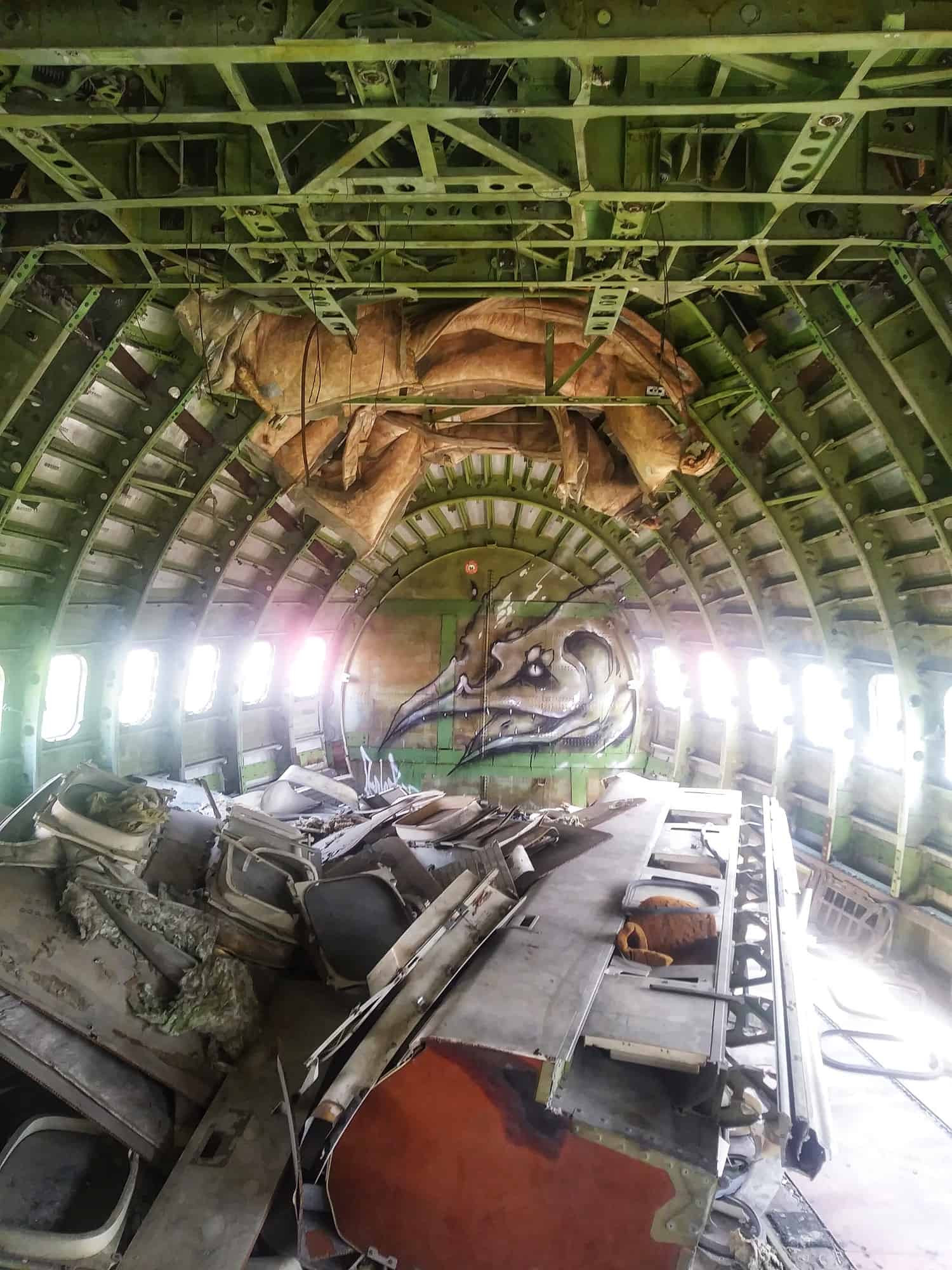
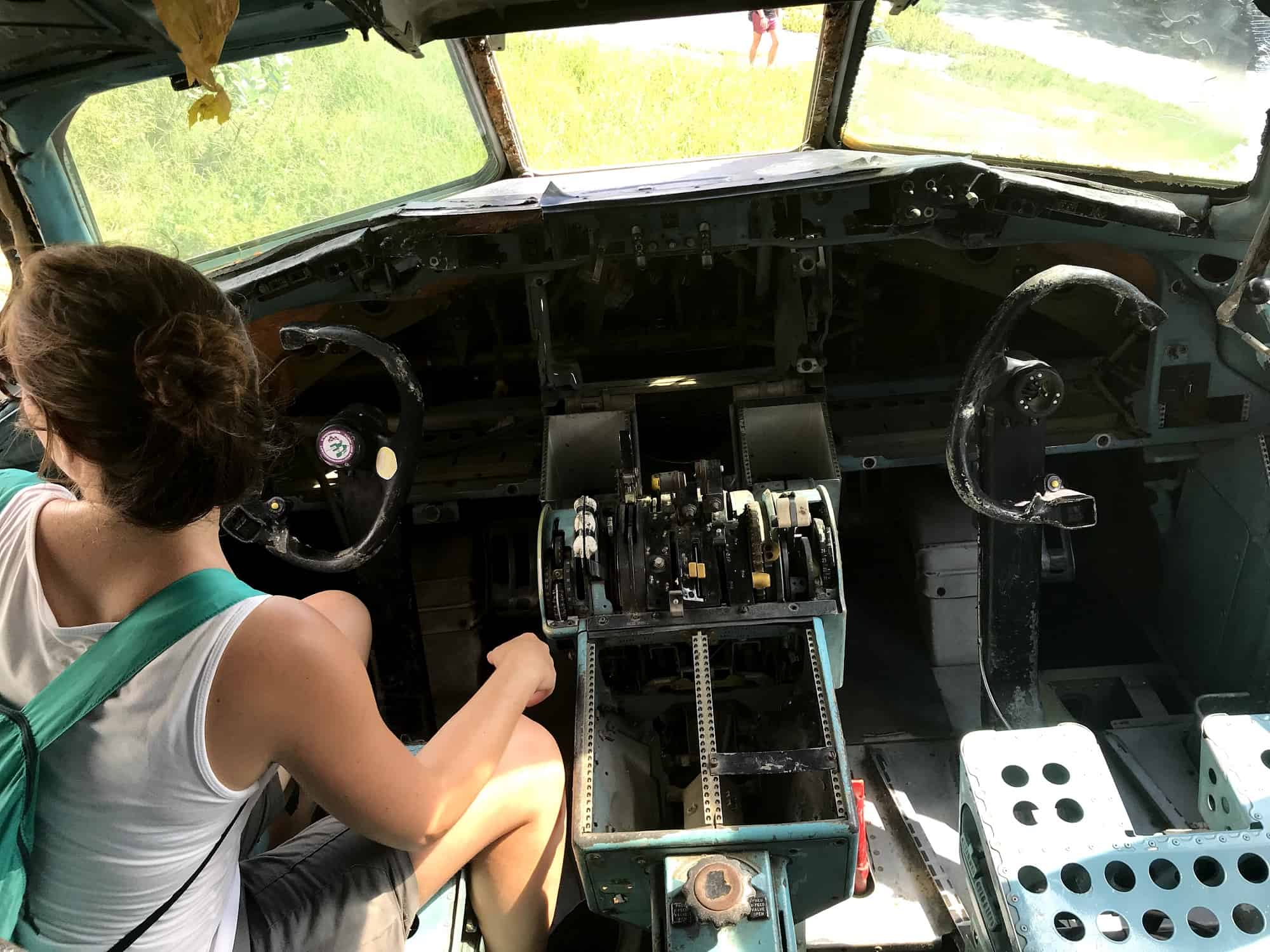
Three derelict jets rotting on waste ground in eastern Bangkok — that’s what the Bangkok airplane graveyard was. Cockpit dials still intact. Oxygen masks dangling from overhead compartments. A Boeing 747 so large you had to crane your neck to see the tail. When I visited a few years back, I genuinely wasn’t sure whether I’d find anything at all. I knocked on a gate, a family appeared, and twenty minutes later I was climbing through a cockpit window onto the roof of a jumbo jet. It was strange, a little eerie, and completely unlike anything else I’ve done in Thailand.
Sadly, if you’re reading this now, you’re too late. The planes are gone. The site on Ramkhamhaeng Road is cleared. But the story of how three aircraft ended up on a patch of Bangkok scrubland — and how three families built a life inside them — is worth telling properly.
Key Takeaways
- The Bangkok airplane graveyard permanently closed in early 2023 — all planes have been removed from the site
- The site held one Boeing 747 and two MD-82 jetliners, formerly operated by Orient Thai Airlines, abandoned on private land in Bang Kapi district around 2010
- Three families moved onto the site in 2015, lived inside the planes, and managed visitor access for 200–300 THB per person
- Tripadvisor lists it as permanently closed with a 3.4/5 rating from 67 reviews before closure
- The best dark tourism alternatives in Bangkok now include the Siriraj Medical Museum, Sathorn Unique Tower, and Wang Saen Suk Hell Garden
What was the Bangkok airplane graveyard?
Bangkok receives over 22 million international tourists per year (Tourism Authority of Thailand, 2023), yet most of them never knew a clutch of decaying commercial aircraft was sitting on a patch of wasteland in the city’s eastern suburbs. The Bangkok airplane graveyard sat off Ramkhamhaeng Road between soi 103 and soi 105 in the Bang Kapi district — an unremarkable-looking stretch of road that hid something quite extraordinary behind a corrugated metal gate.
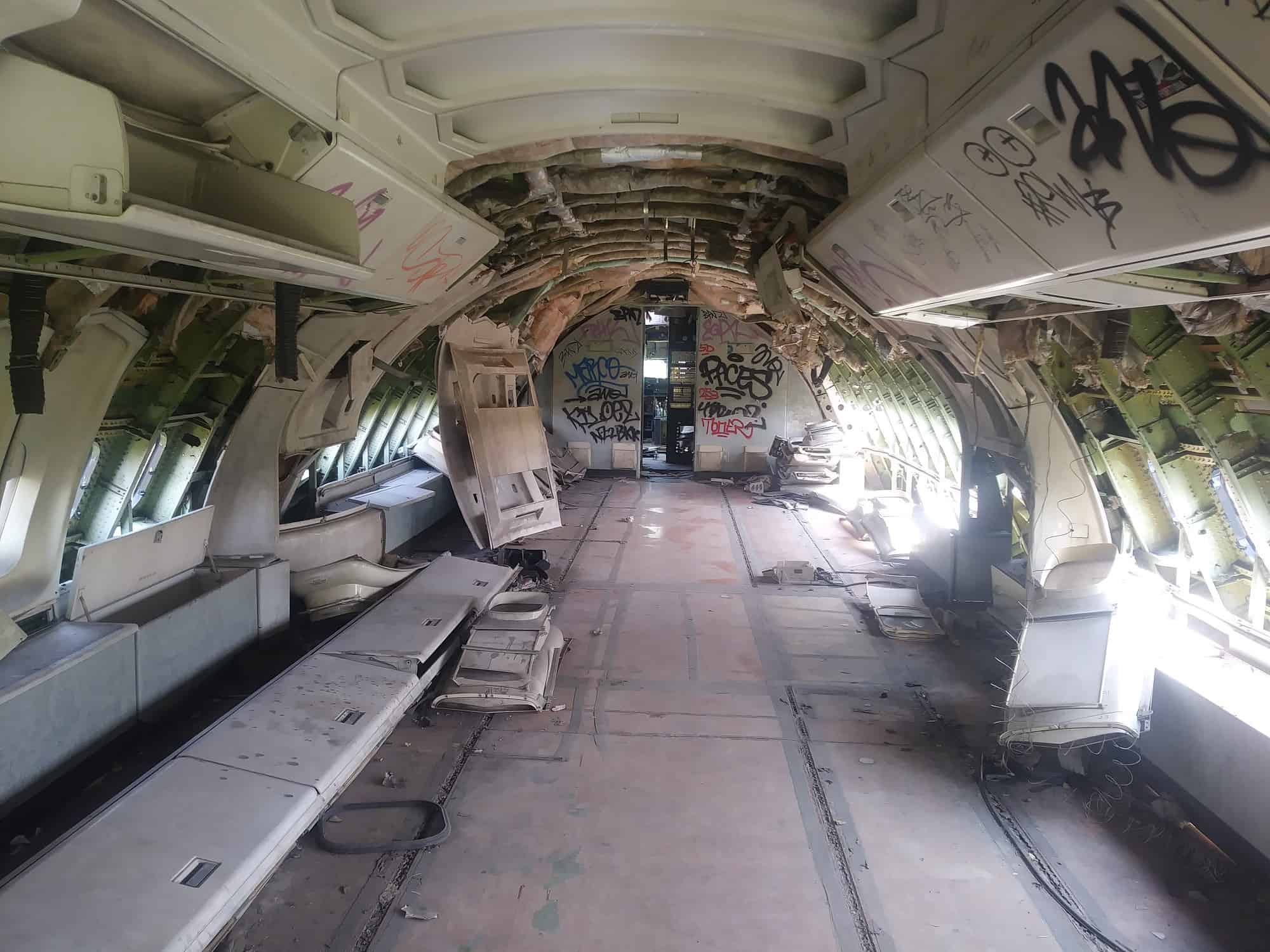
The aircraft were formerly operated by Orient Thai Airlines, a low-cost carrier that ceased regular operations in the mid-2000s before folding entirely. A Thai businessman bought the planes around 2010 with the intention of stripping them for parts — avionics, engines, and any resaleable components went first. What remained were the aluminium shells: hollow, weather-beaten, and gradually sinking into the earth.
The Boeing 747 is a significant aircraft by any measure. It first flew commercially in 1970 (Boeing historical data), making these particular jets more than four decades old when they were abandoned. Alongside the 747 sat two MD-82 narrowbody jets, somewhat smaller but equally photogenic. Together, the three planes formed an accidental monument to aviation history.
For urban explorers and photographers, the site was a dream. For the Bangkok tourism scene, it became a minor but memorable curiosity — the kind of dark tourism destinations that circulate on travel forums and Instagram feeds until someone goes and checks whether it still exists.
The community who called it home
What made the Bangkok airplane graveyard genuinely unusual wasn’t the planes — it was the people. In 2015, three families moved onto the private land and set up home inside the aircraft. This wasn’t squatting in the conventional sense: the arrangement appears to have been informal but tolerated by the landowner, who benefited from having someone on-site.
The families lived full lives inside the fuselages. Children did homework in former passenger cabins. Cooking smells drifted through cockpit windows. Laundry hung between the landing gear. When travellers started finding the location, the families saw an opportunity and began managing access — collecting an entry fee and keeping the site tidy enough to welcome visitors.
The fee was informal and variable: typically 200 to 300 THB per person, depending on who you dealt with and whether you turned up alone or in a group. There was no ticket booth, no sign, no set hours. You knocked, someone answered, money changed hands, and you were free to wander.
That arrangement — families as accidental caretakers of an accidental attraction — gave the place its particular atmosphere. It never felt like a tourist site. It felt like you’d stumbled into someone’s front garden and they’d generously decided to show you around.
What it was like to visit
Getting there required a bit of effort, which suited the place perfectly. The easiest route was the Khlong Saen Saep canal boat — Bangkok’s long, narrow express boat service that threads through the city’s older eastern districts. You’d take it to the last stop, Wat Sriboonruang, then walk roughly ten minutes south toward Ramkhamhaeng Road.
Once you found the gate — easy to miss if you weren’t looking — you knocked or called out. One of the families would appear, take your fee, and wave you through. I paid 200 THB on the day I visited. The site smelled of damp metal and warm earth. Grass had grown up through the cracked tarmac around the landing gear. It felt post-apocalyptic, but in a quiet way, not a dramatic one.
The interiors were open. You could walk through all three planes and touch everything — pull levers, press buttons (most of which did nothing), hold the oxygen masks up to your face. The 747’s cockpit still had its instrument panels, dials fogged with humidity and age. You could sit in the captain’s seat and look out through the cracked windscreen at a wall of banana trees. Somewhere behind me, I could hear a family cooking lunch.
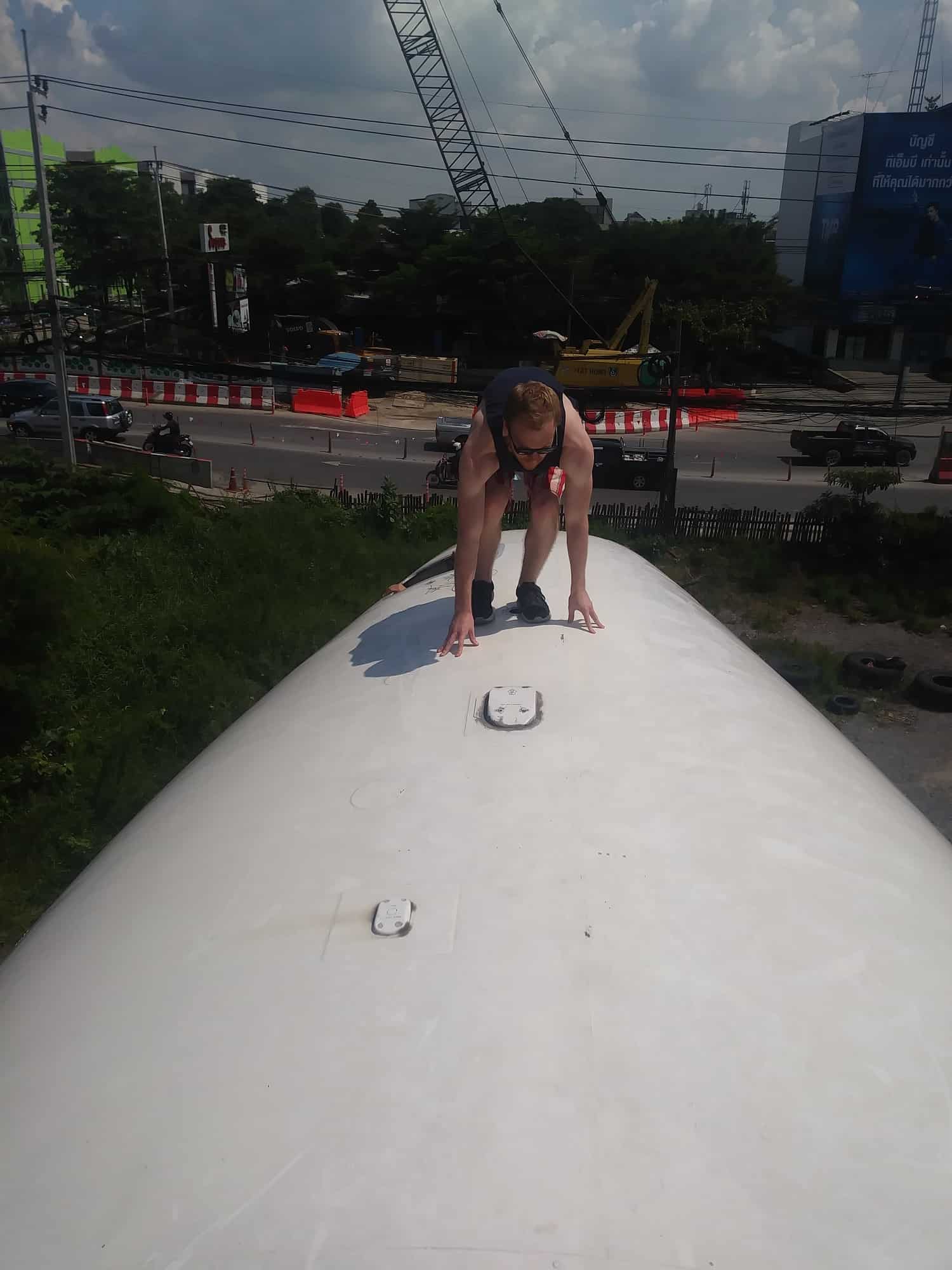
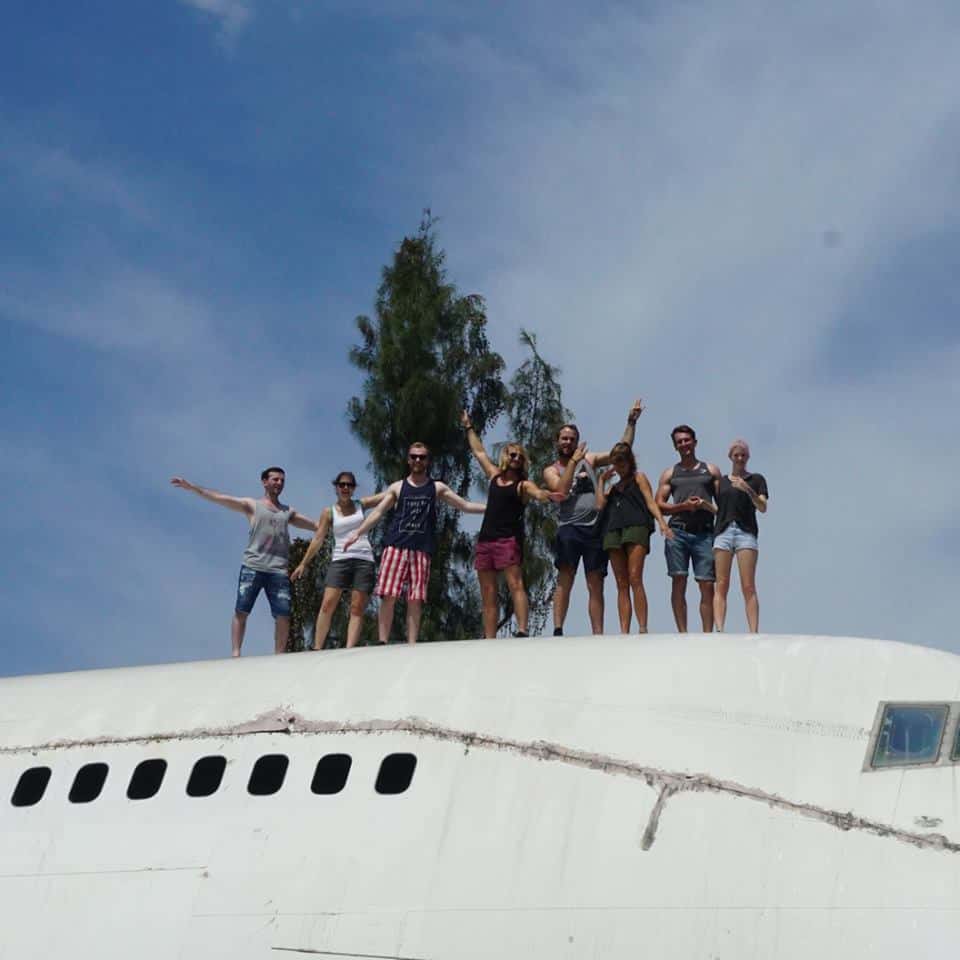
The most memorable — and slightly terrifying — part was climbing to the roof. Through the cockpit window of the 747, there was a way up onto the fuselage top. The drop either side was significant. The roof surface was not designed for walking on. I went up, looked out over the scrubland and the rooftops of Bang Kapi, stayed for about thirty seconds, and came back down. Thrilling. Absolutely do not recommend it if you have any doubts about your balance or nerve.
The whole visit took about an hour — long enough to soak it in, short enough to leave before the novelty wore off. For those wanting to explore the waterways even without the graveyard, a guided longtail boat tour through Bangkok’s canals covers the same eastern districts with a knowledgeable guide.
Why the Bangkok airplane graveyard closed
The timeline of closure was gradual rather than sudden. Reports from visitors in late 2022 noted that one of the MD-82 aircraft had already been partially dismantled. By the time most people realised it was going, the process was essentially complete. The site was fully cleared by early 2023, leaving only concrete foundations and scattered debris.
The reasons were a combination of factors rather than any single event. Private land ownership always meant the attraction existed at someone else’s sufferance — and when the landowner decided to move on, that was that. Safety was a mounting concern too: the aircraft had been deteriorating for over a decade, and the roof-climbing that visitors like me did was genuinely dangerous. Insurance liability didn’t apply to an informal attraction, but the legal exposure for a serious accident was real.
The families’ departure from the site also removed the one thing that made access work: a human presence willing to manage the gate, collect fees, and ensure visitors didn’t do anything catastrophically stupid. Without them, the site had no functioning access system and no one with any interest in maintaining it.
Tripadvisor lists the Bangkok airplane graveyard as permanently closed, with a 3.4/5 rating from 67 reviews (Tripadvisor) dating from before the closure. Reading through them now is a bit like looking at photographs of a place that no longer exists.
Dark tourism alternatives in Bangkok
Bangkok has always been a strong destination for unusual things to do beyond the temples and markets. If the airplane graveyard was on your list, here are the Bangkok hidden gems that come closest to that off-beat, slightly unsettling atmosphere.
Siriraj Medical Museum
The Siriraj Medical Museum is often called Bangkok’s Death Museum, and the nickname is accurate. The complex on the western bank of the Chao Phraya river houses multiple museum wings covering forensic pathology, parasitology, and anatomy. The forensic wing displays the preserved remains of Si Ouey, a serial killer executed in 1959, alongside crime scene evidence from Thai criminal cases. It’s grim, educational, and unlike anything else in the city.
Admission is around 200 THB per museum wing. The Siriraj sits on the grounds of Thailand’s oldest hospital and is a genuinely significant medical institution — the dark displays exist alongside serious academic research, which gives the whole place a more thoughtful atmosphere than you might expect.
Sathorn Unique Tower (Ghost Tower)
Bangkok’s Ghost Tower is a 49-storey abandoned skyscraper in the Sathorn district, started in 1990 and never completed after the 1997 Asian financial crisis wiped out the developer. The building became a well-known urban exploration site for a decade before authorities cracked down on unofficial access around 2018. Climbing the tower independently is now illegal, but organised tours with permission occasionally operate through legitimate operators.
Thai ghost folklore holds that abandoned buildings attract spirits — particularly those who died before completing their life’s work. The tower’s history makes it genuinely resonant in that context. If you want to understand more about ghost beliefs in Thailand, the Sathorn’s reputation is a good entry point into a rich cultural tradition.
Wang Saen Suk Hell Garden
About an hour outside Bangkok in Chonburi province, Wang Saen Suk is a temple complex with an outdoor sculpture park depicting the Buddhist concept of hell. Life-size statues show sinners being punished by demons for specific earthly crimes: the gossip has their tongue pulled out, the glutton is force-fed. It’s visually intense, entirely free to visit, and worth the trip if you’re interested in Buddhist cosmology.
Book a dark tourism experience
If you’d rather explore Bangkok’s darker side with a guide who knows the context and the stories, there are good organised options. Bangkok ghost and dark tourism tours run from around $90 per person and cover the city’s haunted history, spirit houses, and abandoned locations with local guides who can provide the cultural background that makes these places genuinely interesting rather than just gloomy.
Exploring the eastern canals while you’re in the area
The canal network around Ramkhamhaeng Road is worth your time regardless. A half-day private Bangkok canal tour by long-tail boat takes you past wooden stilt houses and temple gardens that haven’t changed in decades — the kind of Bangkok off the beaten path experience the airplane graveyard represented at its best.
Frequently asked questions
Is the Bangkok airplane graveyard still open?
No. The Bangkok airplane graveyard permanently closed in early 2023. All three aircraft — one Boeing 747 and two MD-82 jets — were removed from the site by the end of 2022 and early 2023. The land has been cleared. Tripadvisor lists it as permanently closed, with 67 reviews from before the closure giving it a 3.4/5 rating.
What planes were at the Bangkok airplane graveyard?
The site contained one Boeing 747 and two MD-82 narrowbody jetliners, all formerly operated by Orient Thai Airlines. A Thai businessman purchased the aircraft around 2010 and stripped them of valuable components before abandoning the shells on private land in Bangkok’s Bang Kapi district. The Boeing 747 first flew commercially in 1970 (Boeing historical data), making these aircraft genuinely old by the time they were left to decay.
How much did it cost to visit the Bangkok airplane graveyard?
The fee was informal and varied between 200 and 300 THB per person. There was no fixed price, no ticket booth, and no set hours. Three families who lived on the site managed access and collected fees in exchange for letting visitors explore the planes. The arrangement was entirely unofficial.
How did people get to the Bangkok airplane graveyard?
The most practical route was the Khlong Saen Saep canal boat to the last stop, Wat Sriboonruang pier, followed by a ten-minute walk south toward Ramkhamhaeng Road between soi 103 and soi 105. The canal boat journey took around forty minutes from central Bangkok and cost about 20 THB. Some visitors took a motorbike taxi or Grab from the BTS Ramkhamhaeng station instead.
Why did the Bangkok airplane graveyard close?
The closure came from a combination of factors: the private landowner’s decision to clear the site, mounting safety concerns around the deteriorating aircraft structures, and the departure of the families who had managed visitor access since 2015. Removal of the planes began in late 2022 and was complete by early 2023. Without the families managing the gate, there was no way for visitors to access the site safely in any case.
What are the best dark tourism spots in Bangkok now?
The Siriraj Medical Museum is the strongest alternative — it’s permanent, well-maintained, and genuinely disturbing in the most educational way possible. Sathorn Unique Tower (the Ghost Tower) is a close second, though independent access is now restricted. Wang Saen Suk Hell Garden in nearby Chonburi makes a strong day trip. For a guided experience, Bangkok ghost and dark tourism tours cover several sites in one go with local context.
Is there a ghost tour in Bangkok?
Yes. Several operators run Bangkok ghost and dark tourism tours, typically covering spirit houses, the history of Thai phi (ghost) beliefs, and sites associated with tragedy or the supernatural. Tours run from around $90 per person and last several hours. Thai ghost culture is rich and specific — understanding the beliefs behind the sites makes the experience significantly more interesting than treating it as simple novelty.
The end of an accidental landmark
The Bangkok airplane graveyard was never supposed to be a tourist attraction. It was a businessman’s abandoned investment, then a family’s unconventional home, then a word-of-mouth curiosity that spread through travel forums faster than anyone anticipated. That it lasted nearly a decade says something about Bangkok’s appetite for the unexpected.
If you’re drawn to the kind of Bangkok off the beaten path experience it represented, the city hasn’t run out of places that offer that same mix of history, strangeness, and the slightly uncomfortable feeling of being somewhere you weren’t quite supposed to be. The Siriraj Medical Museum is the most obvious next stop. The canal network around Bang Kapi is worth exploring regardless.
The planes may be gone. The stories about them aren’t.