The travel journal
Best Things To Do – Off The Beaten Path – in Cat Ba, Vietnam
After a long hesitation with Ha Long Bay, we decided to head to Cat Ba island and Lan Ha Bay instead.
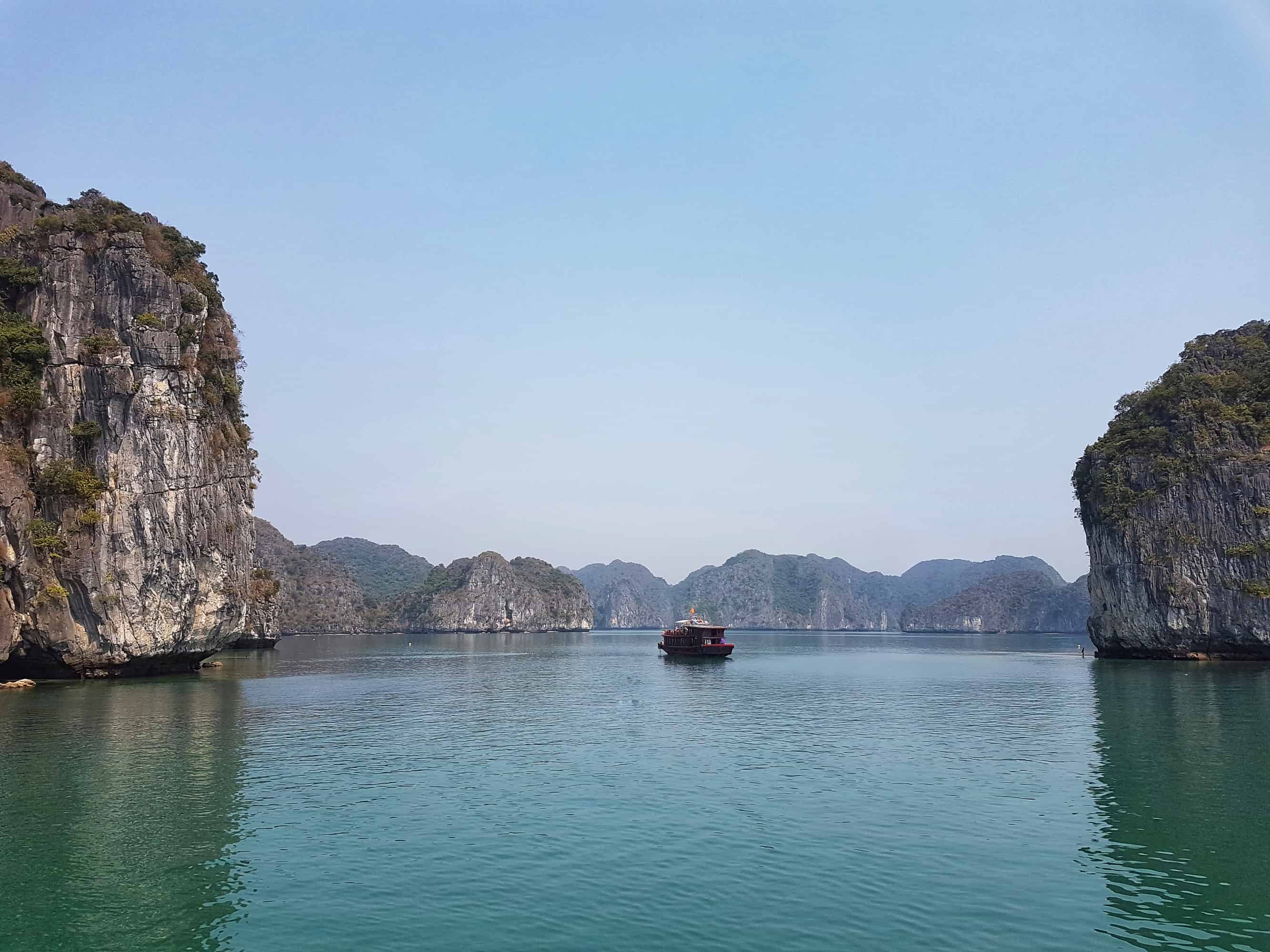
After a long hesitation with Ha Long Bay, we decided to head to Cat Ba island and Lan Ha Bay instead. We heard that Cat Bay island had a young and adventurous atmosphere, and that Lan Ha Bay was as nice as Ha Long Bay, without the thousands of tourists, and the pollution that goes with it. We were not disappointed!
Here is our list of things you should not miss, and a few tips too.
Pin this for later
Things to do and see:
Cat Ba National Park
Cat Ba is basically dozens of limestone mountains, covered with thick jungle. Most of the island is not visitable, due to a small number of roads and tracks. This allows a rich ecosystem to thrive.
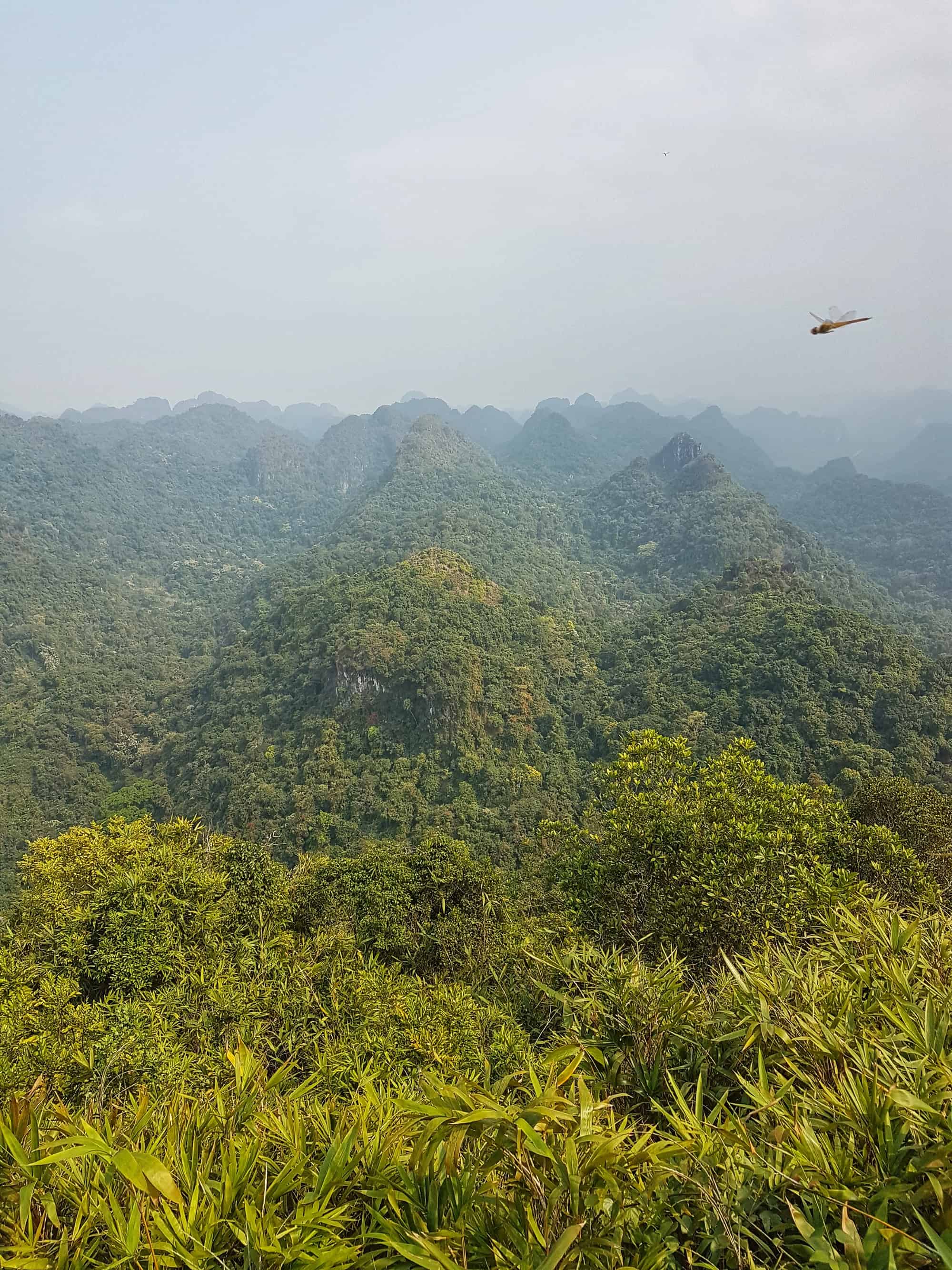
There is a great hike from the entrance of the Cat Ba National Park, all the way up the mountain Dinh Ngu Lam. This is not an easy hike, it can get slippery, there is an endless amount of rocks and steps. In some parts, you will have to climb. However the hike, which is a loop, crosses the in and out ways multiple times, so, if you’re not up to walk all the way up, you can still do a smaller loop. Be advised that they do not give maps at the park entrance, however, it is pretty straight forward, just follows the signs. There are many vendors that sell water at the entrance, which is handy! Many people will attract you to park your bike next to their stands, in exchange for you to buy a snack or a drink from their stall.
The entrance to the park is 40,000.00 dongs (about 1.5 euro, or 2.0 dollars). This include the entrance to the Dark Cave, located a bit more south. The cave has recently been arranged with a path, steps and lights, which makes the visit very easy for anyone.
We did not expect such a walk, but it is beautiful, and the view at the top is so worth it, a great way to spend the afternoon!
[
View this post on Instagram
](https://www.instagram.com/p/Bu3WDMigP5q/?utm_source=ig_embed&utm_medium=loading)
A post shared by Lost Abroad (@lostabroad.travelling) on Mar 11, 2019 at 3:31am PDT
The Hospital Cave
The Hospital cave is a must see. The visit is pretty short and cost 40,000.00 dongs (1.5 euro, or 2 dollars) but it is really interesting. The parking is 10,000.00 dongs.
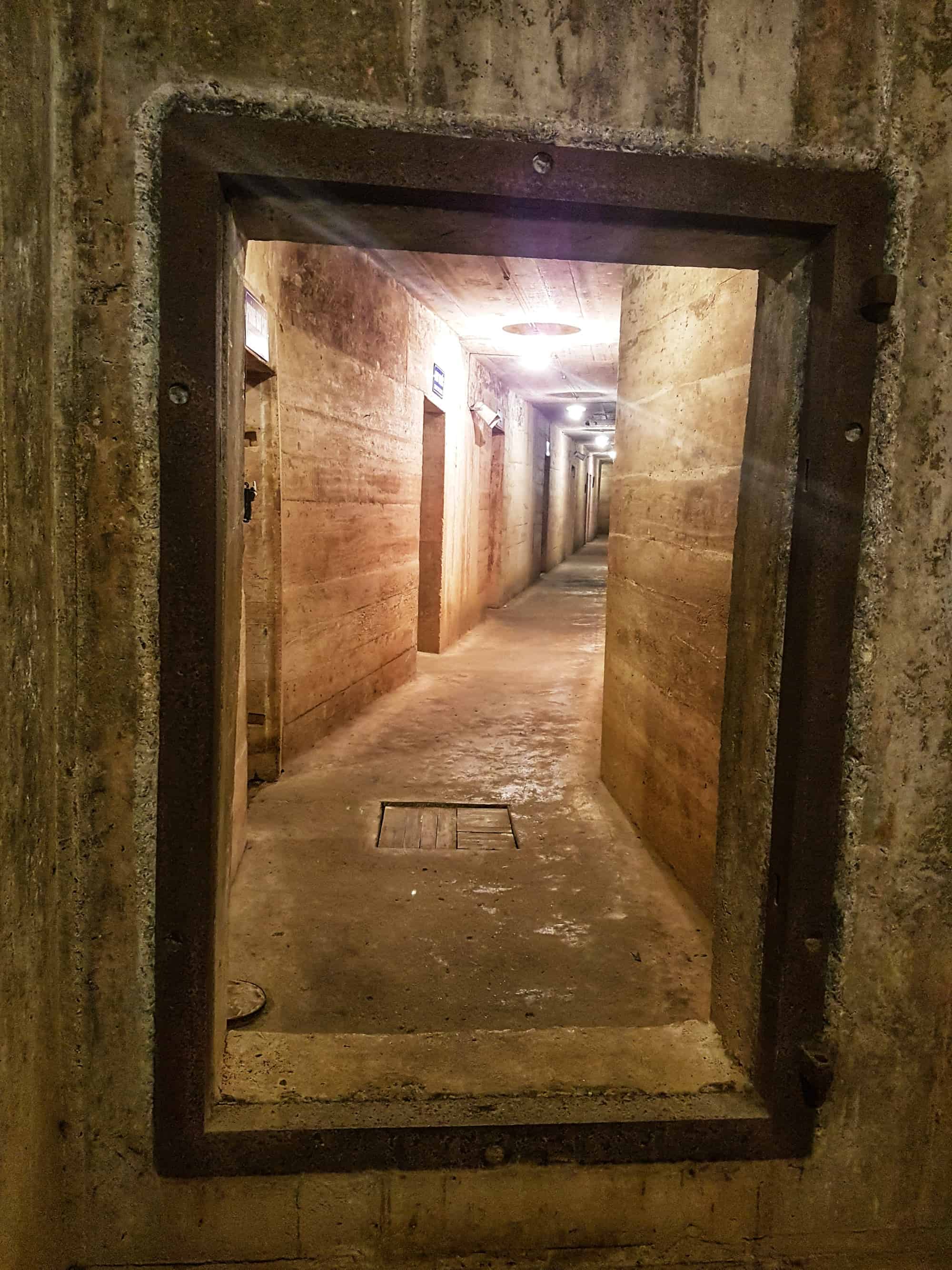
As its name summarises it, this was a secret, bombproof hospital located in a cave during the American War, and used by the Viet Cong. It was built between 1963 and 1965 with the help of China. It could not be seen from the air or from the ground, and even when you get there, you only notice the entrance of the cave once you get really close.
The build-up is really impressive and ingenious. It has several rooms, three levels, with emergency exits in case of attack, ventilation shafts, even a small swimming pool, and a cavern used as a cinema!
Be advised that there is a flight of steep steps to access the entrance of the cave.
Cannon Fort
We heard of Cannon Fort as being the place to visit, and the nicest view for sunset in all Vietnam. When we went there, it was very misty so, unfortunately, we could not see very far… the good part is you can get all the way up with your scooter!
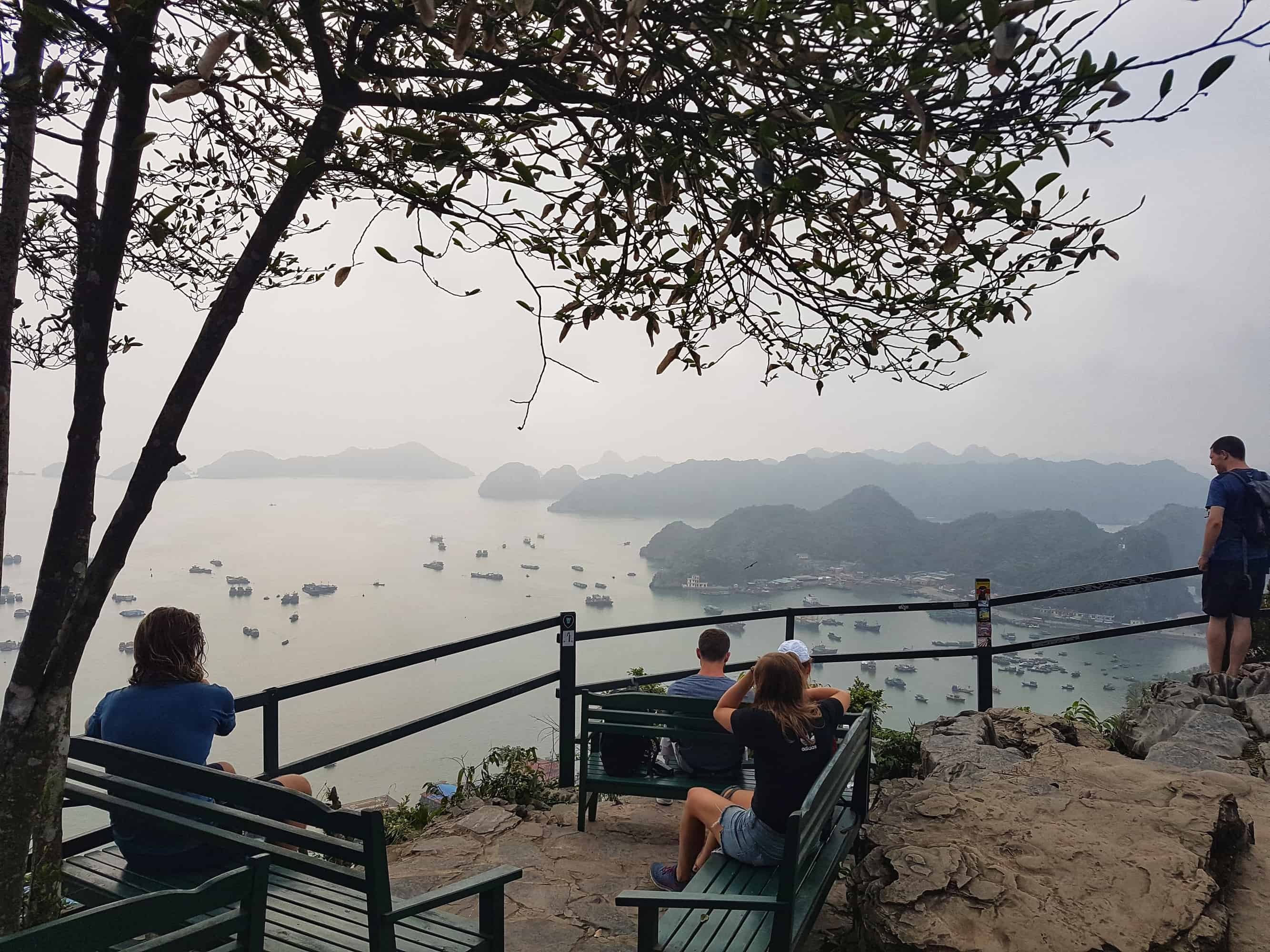
You’ll have to pay the entrance (40,000.000 dongs) and parking at the top of the hill (10,000.00 dongs).
Be aware that the best spot for sunset is quite small ( as pictured above), and only have a few benches, so arrive early if you want to secure a seat!
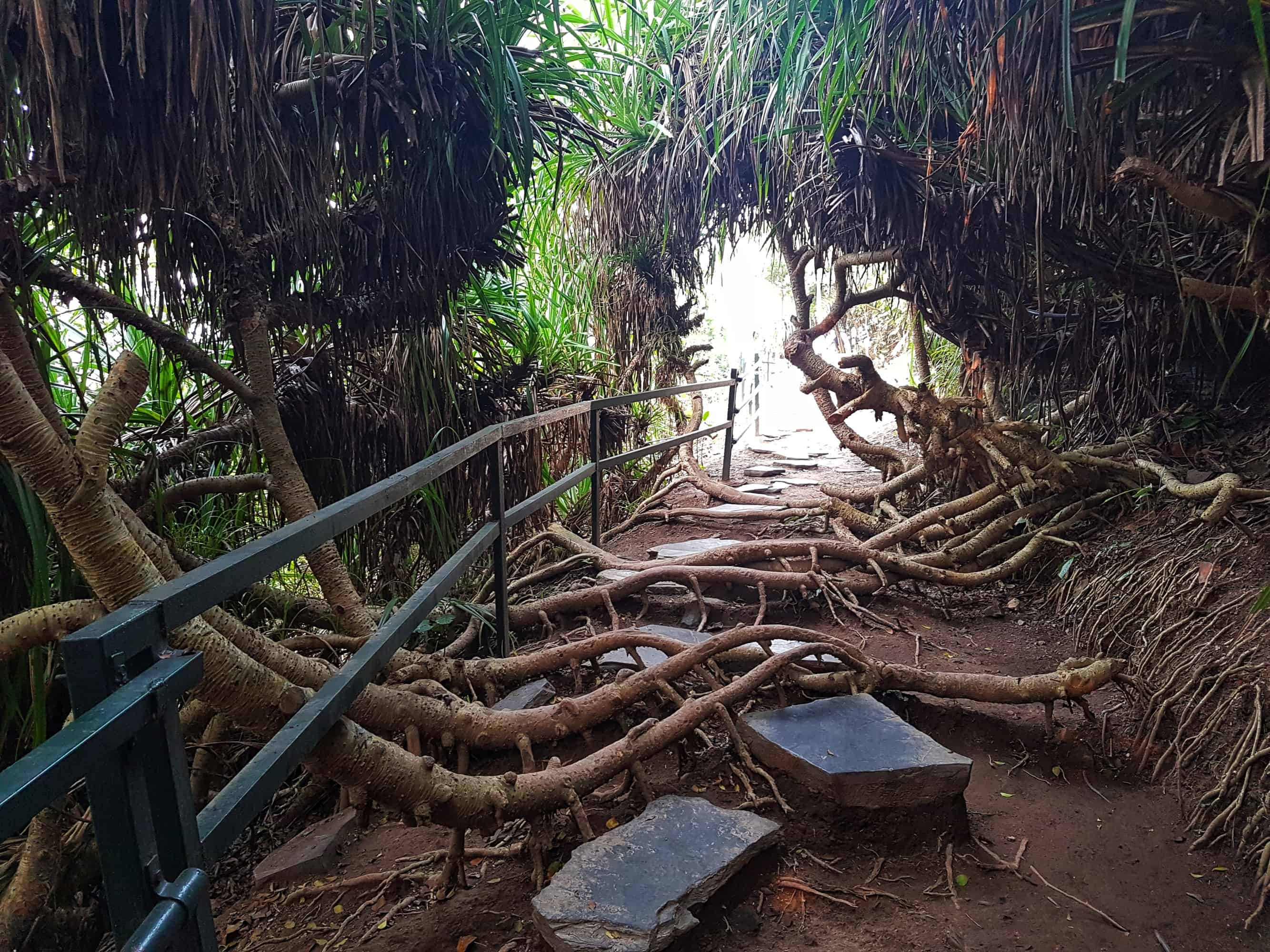
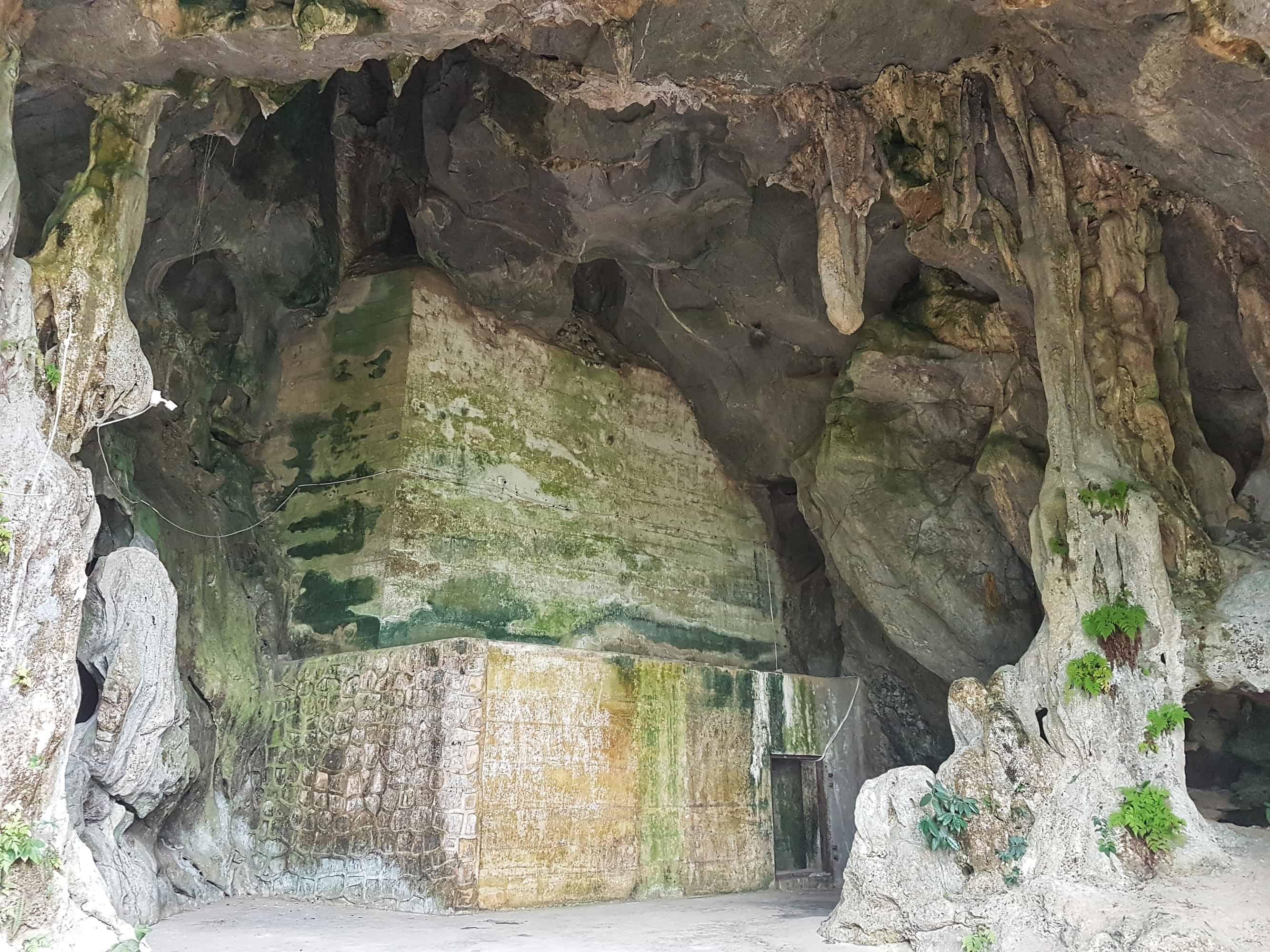
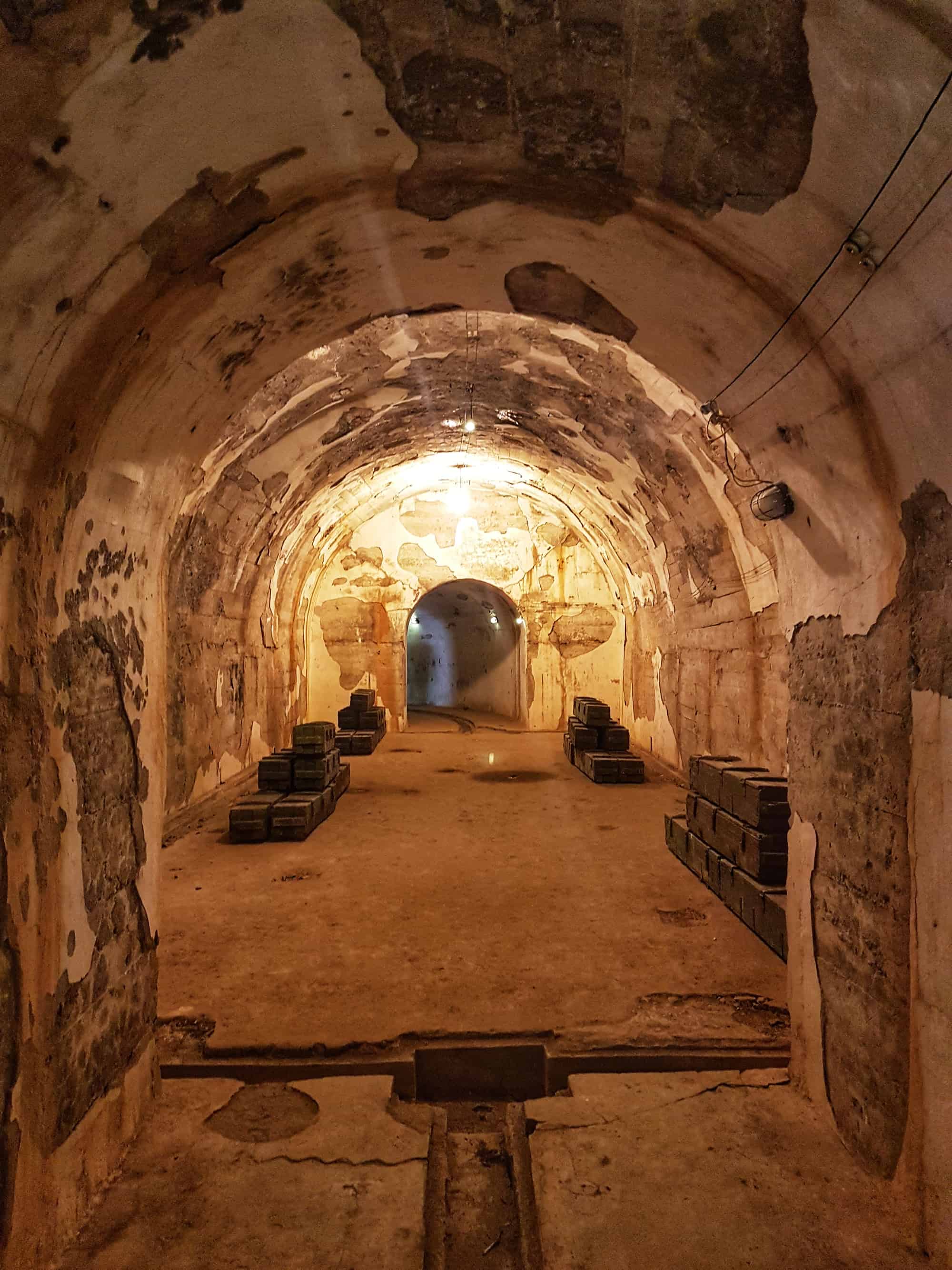
Cannon Fort was (as its name indicates) a fort used by the military in the wartime. There are a lot of remains from this time, cannons and tunnels, that you can see. Its history is quite rich. The down side is that they don’t have any information panels anywhere. However, this article will tell you more about its history: the history of Cannon Fort.
There is a cafe on the other side, with good views as well.
A day trip to Lan Ha Bay
If you are going to cat Ba, you cannot miss a trip to the bay! Lan Ha Bay is as beautiful as Ha Long Bay, in less busy and still relatively untouched.
There are so many companies that offer trips that it is really hard to pick one! Our choice was going to Cat Ba Ventures, until we met some fellow travelers and decided to follow them on the trip they had booked with Cat Ba Express (the same company that offers bus trips between Hanoi and the island).
For 25 dollars, we spent the full day around the bay. We started at 7.30am, had a welcome snack on the boat, checked out the fishing village, went for a swim on a deserted beach, had an incredible lunch made by the chef on the boat, discovered the bay, went for a kayaking trip through caves, and finally came back around 15h30 or so. We would highly recommend it.
-
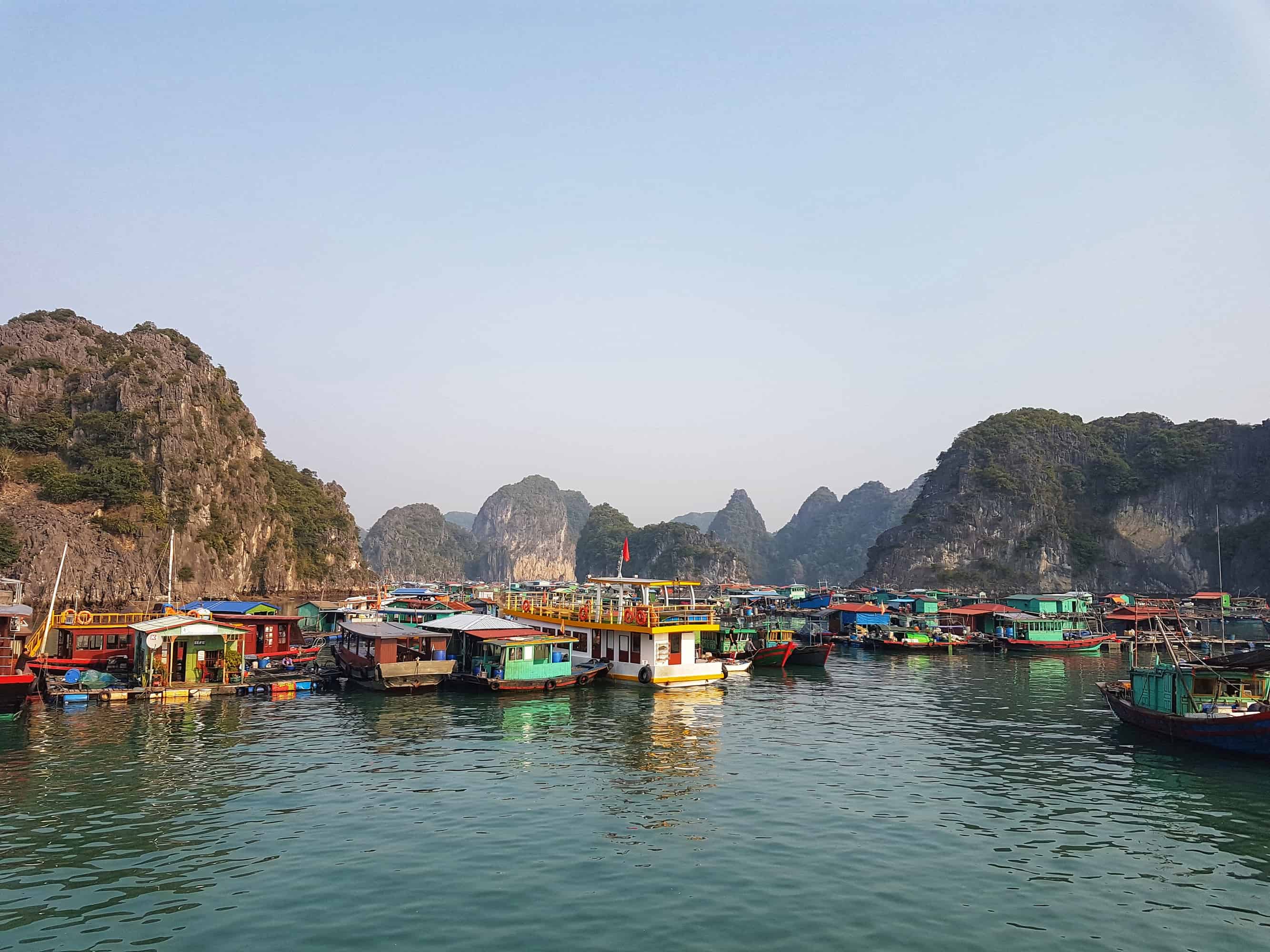
Cai Beo Fishing Village, Lan Ha Bay, Vietnam
Cat Ba Market
Cat Ba market is a small spot near the port. You can easily find it on Google maps (or follow our link at the bottom of the article). The first stalls are fruits and vegetables, followed by other goods, with the meat and seafood sections further in. It’s great to check out what’s on offer (we even saw some unknown sea animals). If you are looking for snacks, this is also a great spot (we got lychees and peanuts, go for the darker, reddish ones).
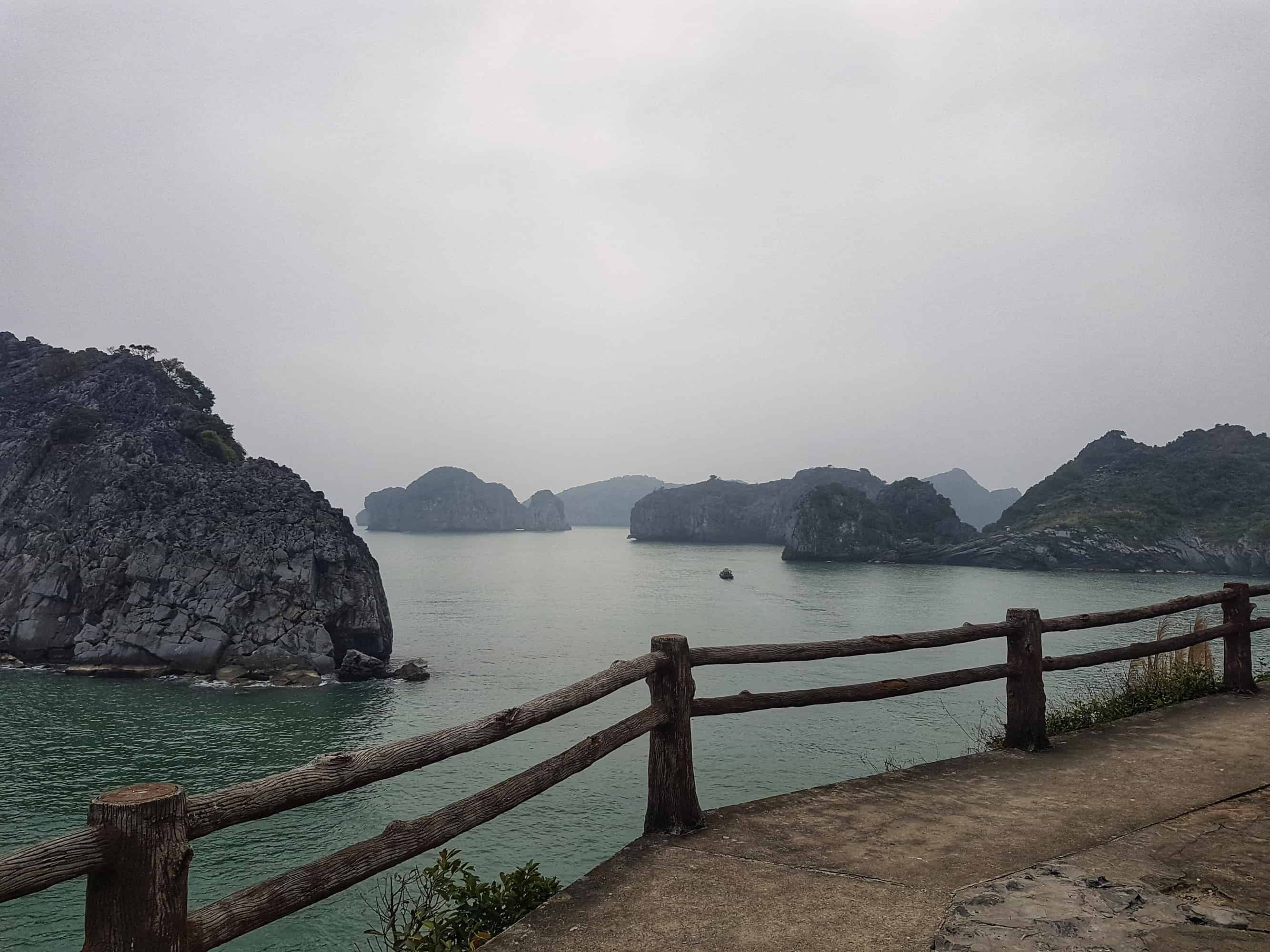
Walking between Cat Co 1 and Cat Co 3
There is a lovely, short walk between Cat Co 1 and Cat Co 3. This is a 10 minute walk, but the views are really nice.
Update regarding beaches
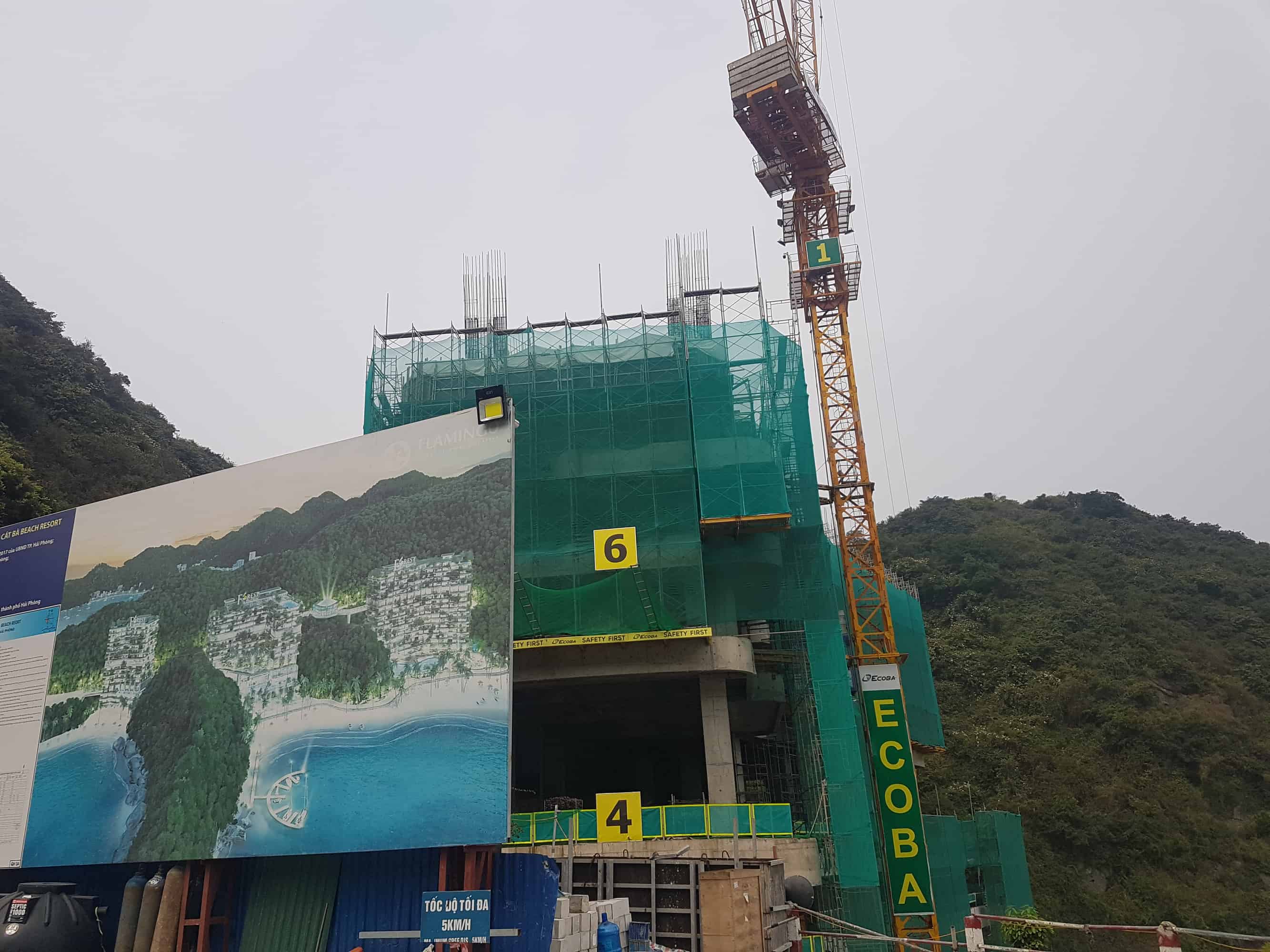
Many places would recommend Cat Co1, 2 and 3 as beautiful beaches to go to. Unfortunately, things have been changing quite drastically. Cat Co 1 and Cat Co 3 have barely any space left, due to huge hotels being built. In the high season, you can only imagine how it looks like. Cat Co 2, which was recommended to us to be quieter and where you could see bioluminescent plankton, has been bought and now a huge complex made a 3 massive buildings are being built on Cat Co 1, Cat Co 2, and on Storland beach. So none of them are now accessible during construction, and will probably remain so unless you are a client of the hotel. This was a huge disappointment. It is even hard to understand how this project was allowed, but this a whole different topic.
Tung Thu Beach, which was known as the “secret beach” of Cat Ba, has had a huge road built next to it, as a shortcut to the town. You can then forget the peacefulness of the the place here as well. The road does not appear on google map as of yet, but it is definitely there (you can see how big it is on google satellite).
So, to conclude, the only beach we found that was nice and quiet, was on a remote island during our tour of Lan Ha Bay. If you want to find a nice spot, you certainly will have to go away from Hai Phong.
Places to eat and drink:
To be honest, Cat Ba has been terrible to find good food and places to have a drink. Everything looks the same and serve the same type of food, too often tasteless. We tried many places recommended by Lonely Planet and TripAdvisor and were not impressed (maybe we’re getting too picky?). Finnally, we did find some gems! Here are the places we would go back to:
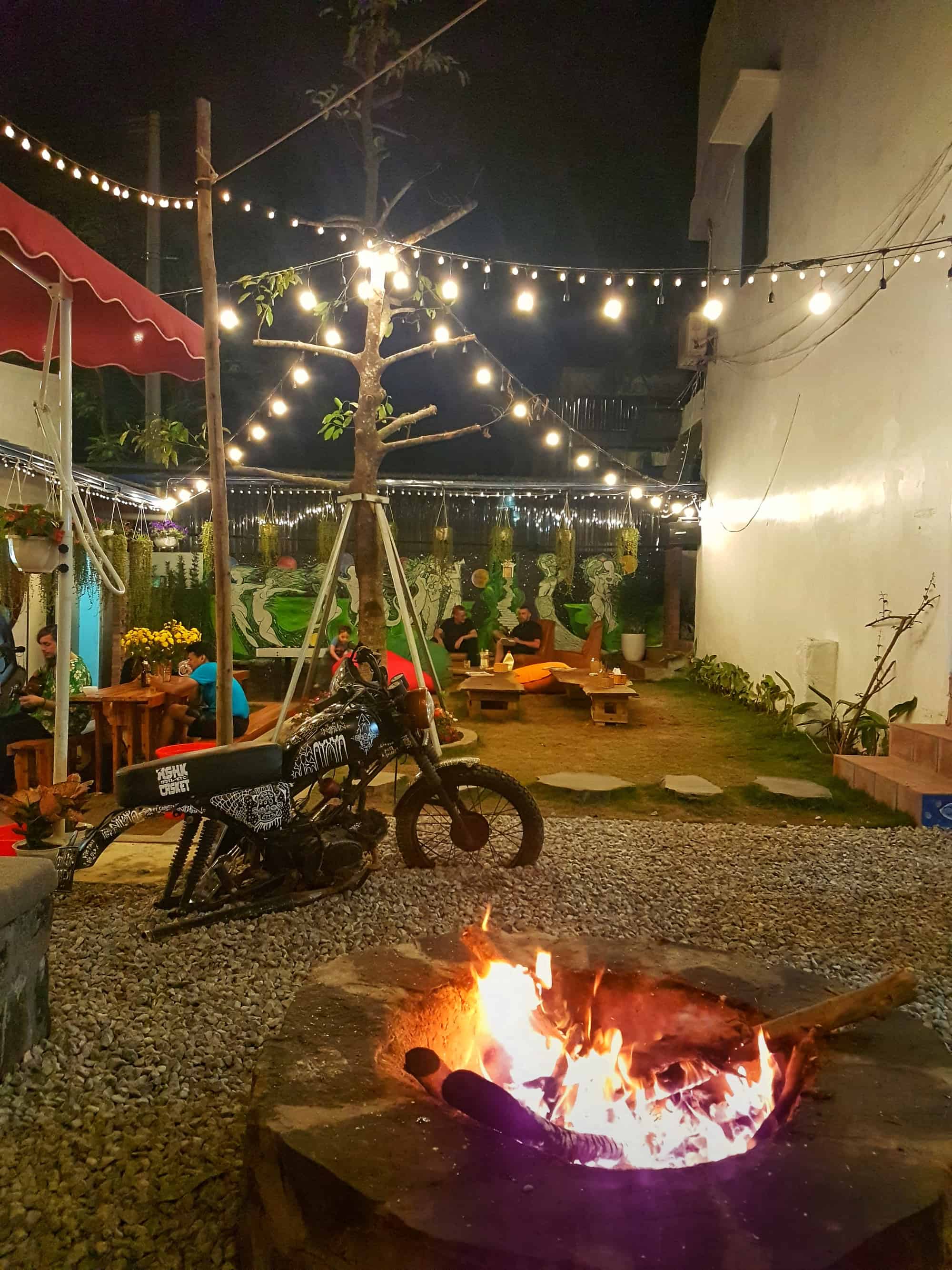
Secret Garden
The best place to chill on the island, we could not understand how we never heard of it before! We then learned that Secret Garden only had opened 12 days earlier, which explains it. The people running it, they just get it. The atmosphere, chilled but with perfect details, the quality food, the cheap beer, the REAL quality music (not that stuff you hear on the radio), and the people who are just great fun (plus, they sell the biggest balloons we ever saw). A 10/10 from us!
Check out and book The Secret Garden
They also do happy hour and got a few pool tables around. It is a hostel, so you can stay in dorms. If you want to go there, I’ll suggest you book your bed in advance, because this place is THE spot on the island.
Phi Nhung Quan
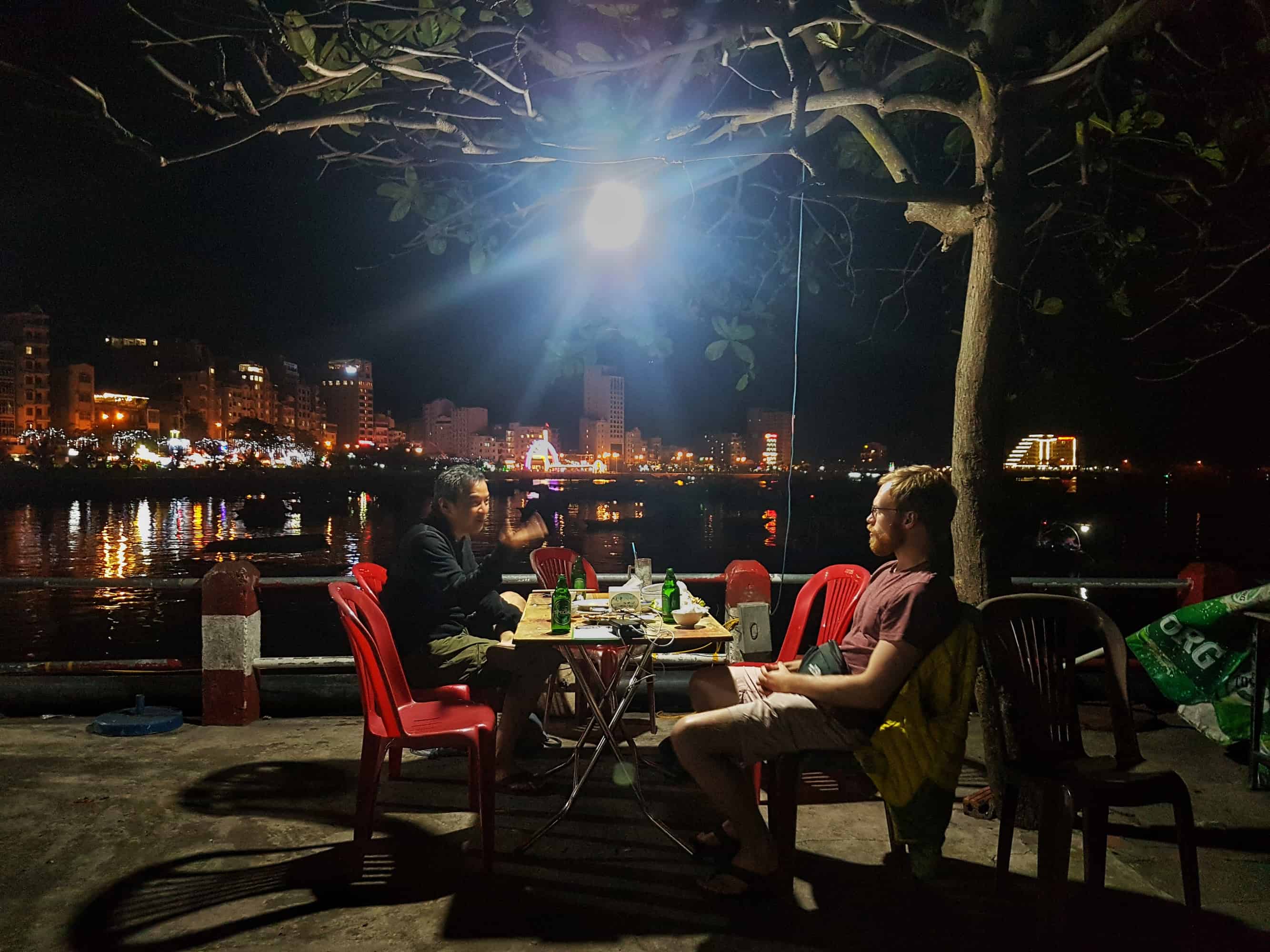
We could not find a good seafood restaurant, and we were dying for it. I mean, this is a fisherman island, isn’t it? We ended up asking Charlie, our guide from our Cat Ba Express Tour, who said that if he wanted to eat good seafood, he would go to Phi Nhung Quan. Indeed, the place was packed with locals! It is located in a quiet area, with tables by the sea. They do have a menu in English, which is handy. We got a garlic and spinach dish, fried prawns and a grilled fish with herbs and garlic. Everything was incredible. The portions aren’t huge, but the quality makes up for it.
Cat Ba Mountain View
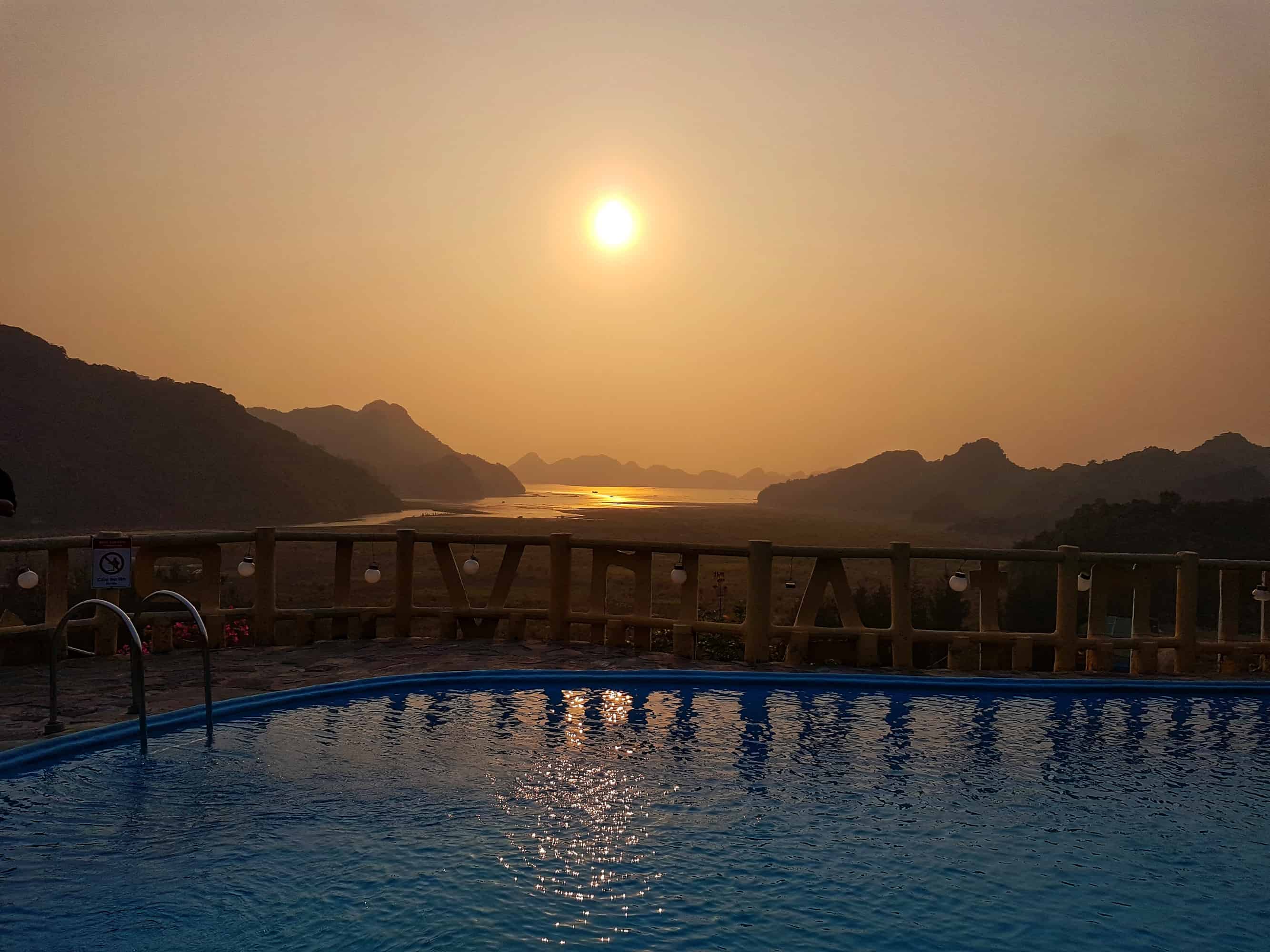
Cat Ba Mountain View has, as its name indicates it, an incredible view! You can sleep there for pretty cheap (the bungalows are simple but very clean, with AC and Breakfast), and the top of the mountain has a bar, a swimming pool, a huge trampoline and pool tables. A great spot to spend an evening while the sun is setting. Be aware that you’ll have to take the stairs all the way up, which is a bit of a climb! But look at that view.
Want to stay and enjoy that view everyday? Book Cat Ba Mountain View
Quiri Pub Cocktail and Restaurant
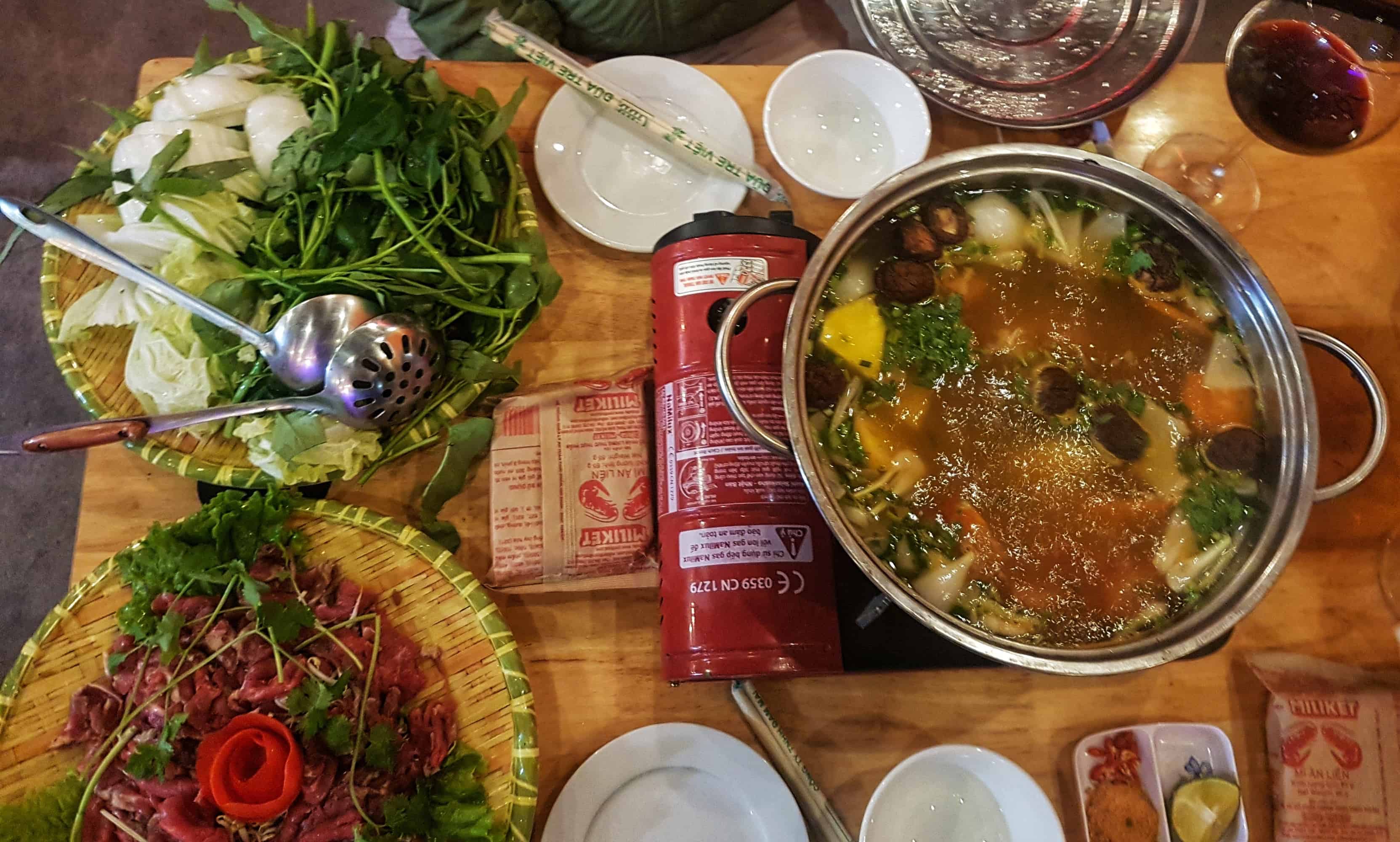
This place is well known. We were afraid too many tourists would ruin it but we liked it. The reasons: the host is such a lovely man, always ready to help, and they do a great Hot Pot for 2 people at 300,000.00 dongs. And trust me, you will not leave hungry after eating it!
Note
Keep in mind that Cat Ba is changing and expanding at an incredible speed, most guides such as Lonely Planet are not accurate anymore, nor is Google map (many places, even roads had closed when we were there).
Check below all of our recommendations on one map, save it and use it on your Google maps later!
Last updated