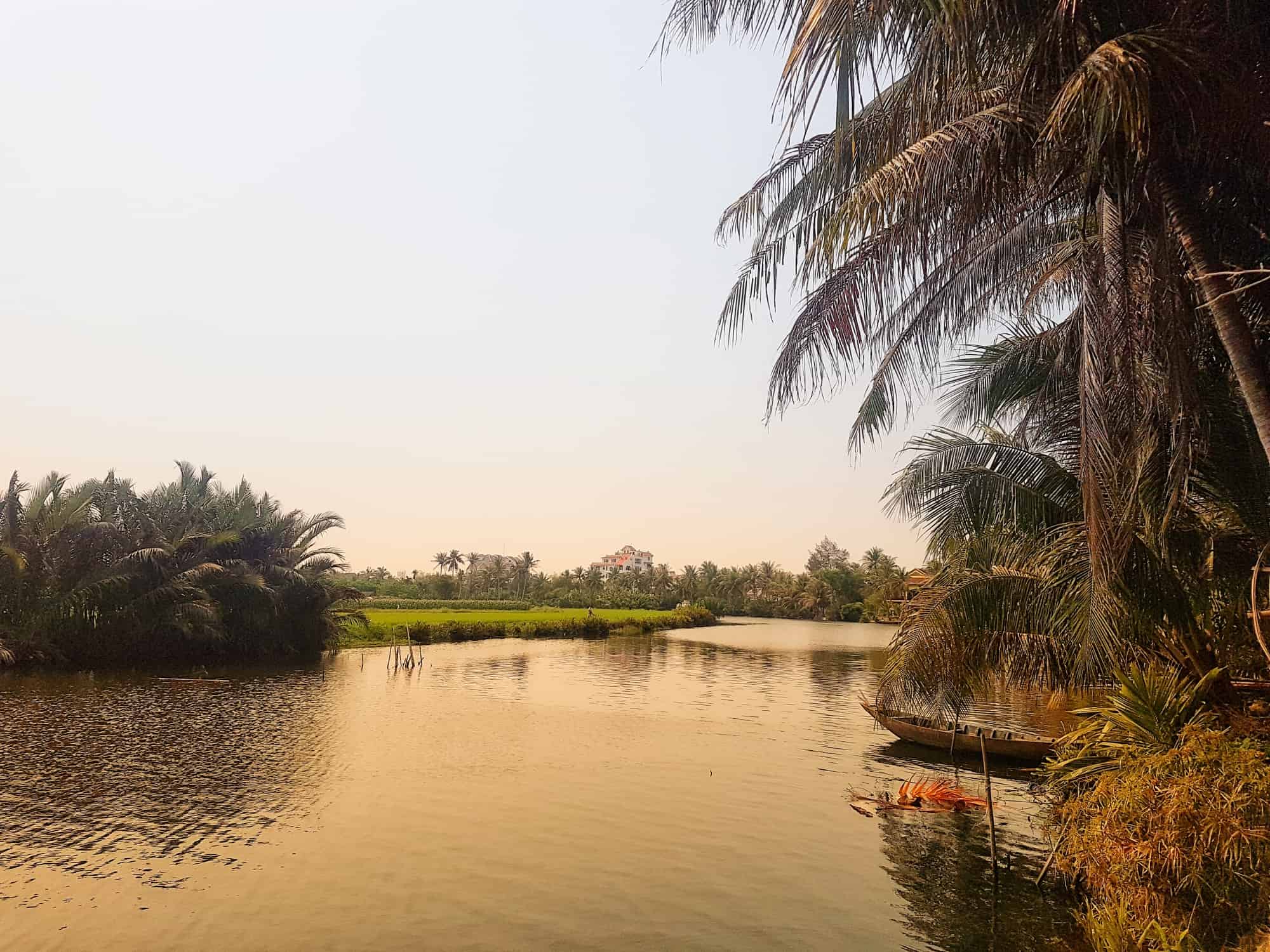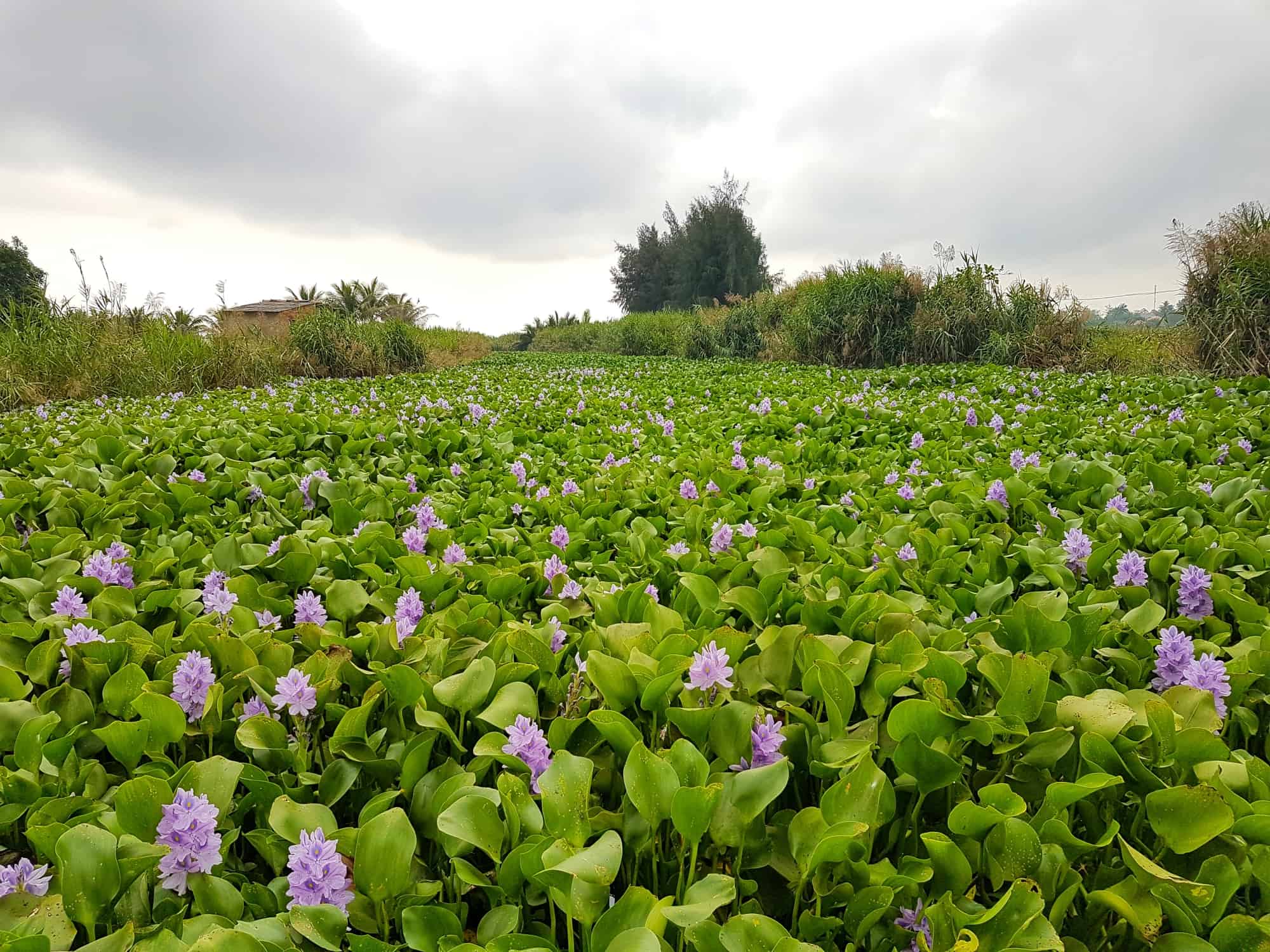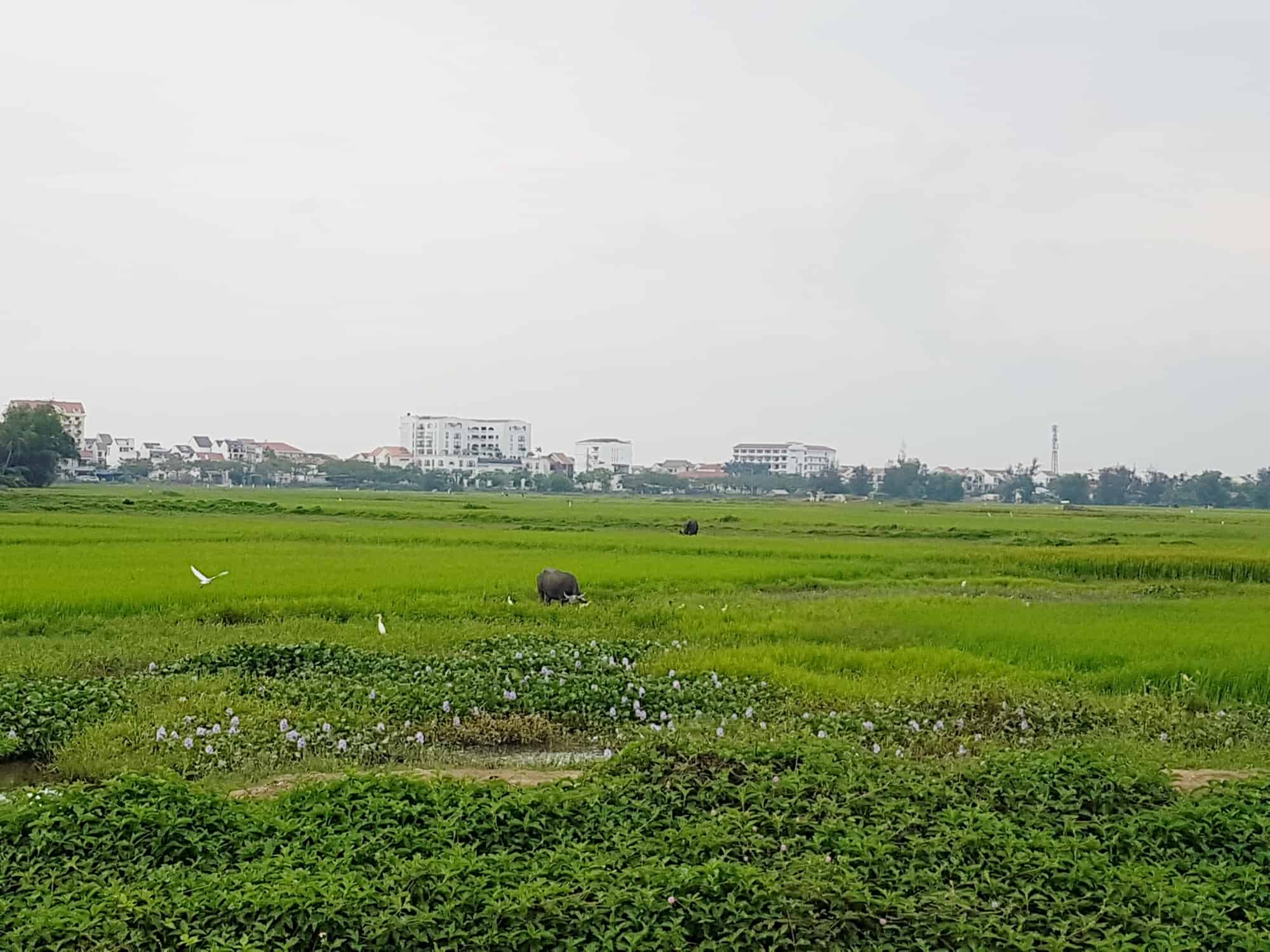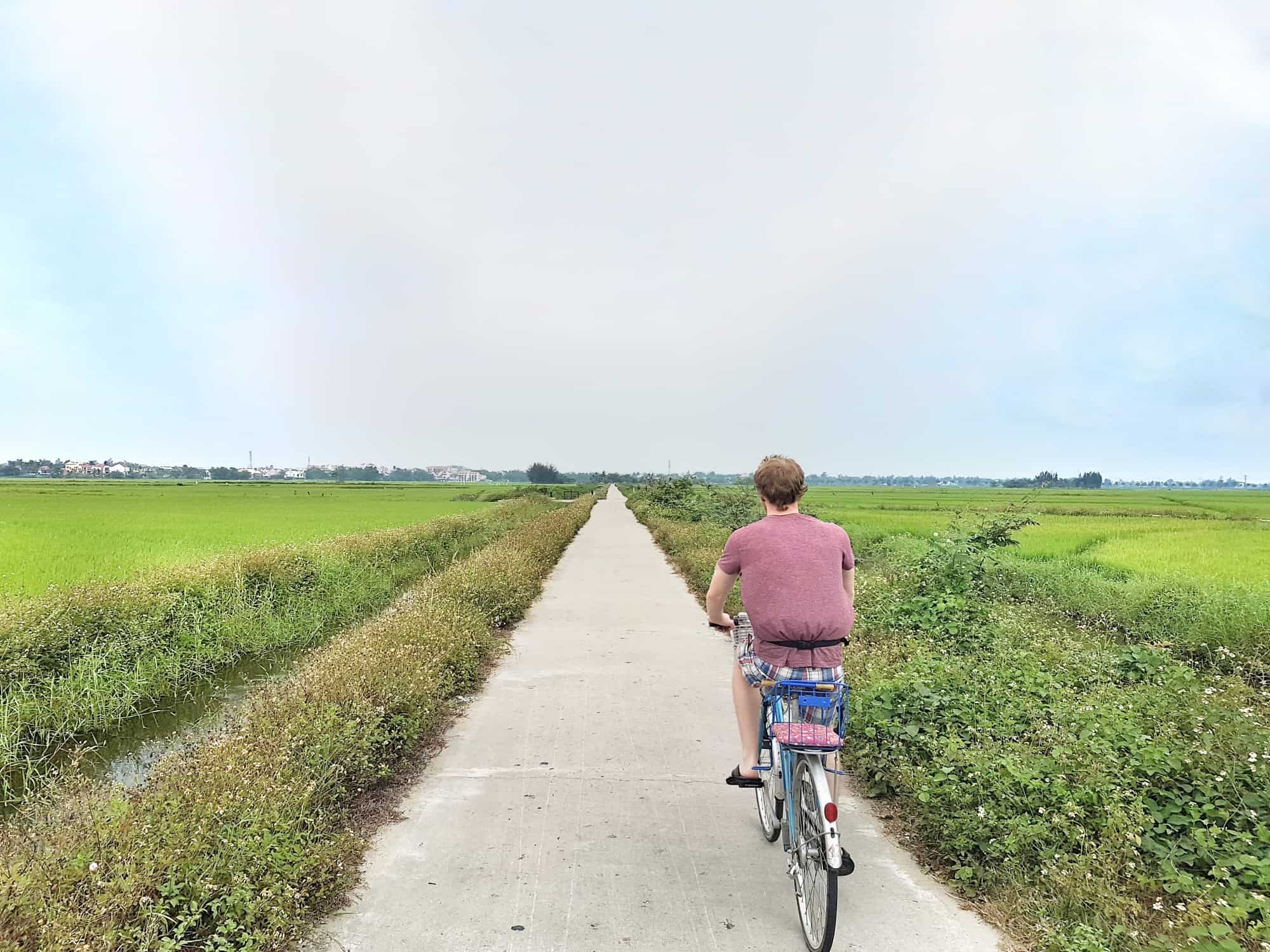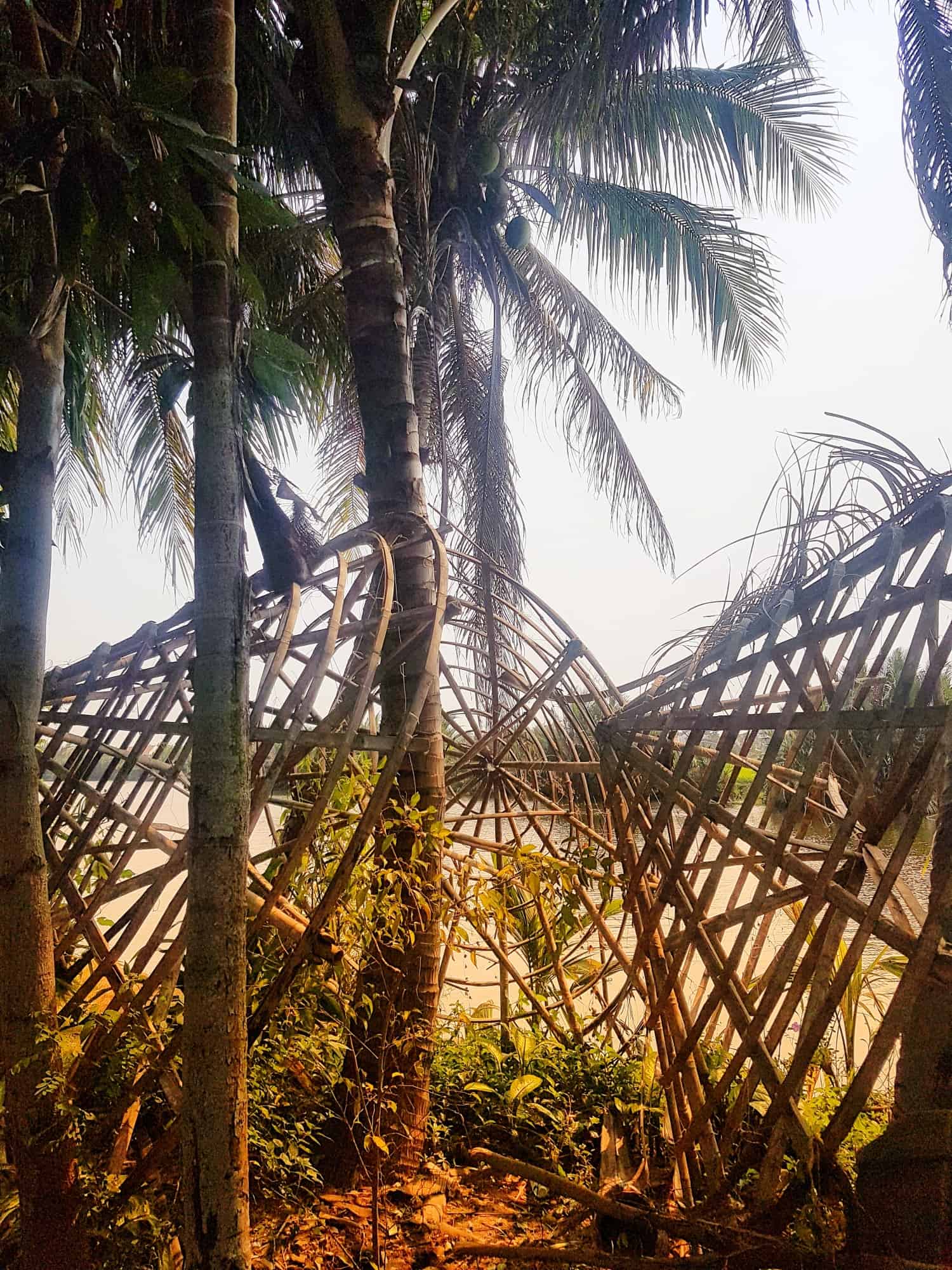
By seven in the morning, the Thu Bon River is silver and still. The Old Town’s yellow walls are just catching the light and the streets are quiet — that particular quiet before the tour groups arrive. That’s when we collected our bikes from the guesthouse, pushed through the gate, and went looking for water buffaloes.
Cycling in Hoi An is one of the most rewarding ways to see beyond the UNESCO World Heritage-listed Old Town, which has been on the list since 1999. The terrain is almost entirely flat, bike rental costs around $2–4 per day, and within fifteen minutes of leaving the centre you’re riding through rice paddies with working farms on either side. This self-guided cycling guide covers the four best routes, where to rent a bike, and everything to know before heading out for a half-day ride.
Quick guide: cycling in Hoi An
- Terrain: Almost entirely flat — suitable for all fitness levels
- Best time: Before 9am (cooler air, less traffic)
- Bike rental: From 50,000 VND (~$2) per day for a standard bike
- Easiest route: Tra Que Village — 12km round trip, 2–3 hours
- Coast route: An Bang Beach — 4km from the Old Town, ~25 minutes each way
- Navigation: Download Google Maps offline before you leave the guesthouse
- Updated: 2026
Why cycling in Hoi An works so well
Most cycling destinations in Southeast Asia come with caveats — steep hills, heavy traffic, or roads too busy for a relaxed ride. Hoi An has none of those problems. The land around the city is a flat river delta, and the countryside is crossed by a network of narrow concrete lanes that barely see a car. Within a few hundred metres of the Old Town you’re already in a completely different world.
Bikes are everywhere in Hoi An. Almost every guesthouse offers rental, and the routes are forgiving enough for casual riders. There’s no fixed itinerary — you can follow your nose through paddy fields, stop at a farm stand for fresh sugarcane juice, or double back to a viewpoint you liked. For anyone building a broader cycling in Vietnam itinerary, Hoi An is one of the most beginner-friendly stops on the route.
The best cycling routes in Hoi An
Route 1: Tra Que Village and the rice paddies
This is the most popular self-guided route and the one to start with if you’ve never cycled outside the Old Town. From the centre, head northwest along the river, then turn into the countryside on the small concrete lanes. The change is immediate — paddy fields replace buildings, and water buffaloes replace tuk-tuks.
The destination is Tra Que Herb and Vegetable Village, a traditional farming community that has been growing herbs, greens, and medicinal plants for generations. Tra Que holds a 4.5-star rating on TripAdvisor from over 600 reviews — a consistent favourite for visitors who make the effort to get there by bike. The gardens are compact and walkable, and the farmers are used to curious visitors. An entrance fee of around 37,000 VND (~$1.50) applies (as of 2026).
From the village, you can continue along the river path or loop back through a different set of paddies. This is the route we took — fishing nets strung along the river banks, a family of ducks crossing the lane, and the occasional motorbike carrying vegetables to market. Google Maps handles navigation well; use the route below as a starting point.
Distance: ~12km round trip from the Old Town
Time: 2–3 hours including a stop at the village
Difficulty: Easy — entirely flat, one small bridge
Route 2: An Bang Beach
Head east from the Old Town for the coast route. An Bang Beach is about 4km from the centre — a flat, direct ride through rice fields and quiet residential lanes that takes around 20–25 minutes in each direction. The transition from countryside to coast is sudden: one minute you’re in paddy fields, the next you’re locking your bike to a palm tree with the South China Sea in front of you.
An Bang is a full beach experience with sunbeds, seafood restaurants, and laid-back bars stretching along the sand. It’s busy by mid-morning, so getting there early means a quieter beach and easier parking for your bike. The waters off An Bang are calm enough for a swim and clear enough for a mask-and-snorkel — worth considering if you’re planning to do some snorkelling in Vietnam during your trip.
Distance: ~8km round trip
Time: 40–60 minutes riding; allow 1–2 hours at the beach
Difficulty: Easy — mainly flat, with short sections of busier road near the coast
Route 3: Cam Thanh Coconut Village
For a quieter half-day, head south from the Old Town to Cam Thanh. This village is set in a water coconut forest — dense groves of nipa palms lining the river banks — and is best known for traditional round basket boats. Local guides offer short basket boat rides through the palms, which are genuinely enjoyable and popular for photos.
The cycling itself is peaceful: small lanes, canal bridges, and very little traffic once you’re past the outskirts of the city. The village sits around 5–7km from the Old Town. Most visitors combine the ride with a basket boat session and then return via a slightly different route through the countryside.
Distance: ~12–14km round trip
Time: 2–3 hours including time on the water
Difficulty: Easy
Route 4: Cam Kim Island
Cam Kim Island is the most adventurous of the four routes and the best option for a full half-day. It’s reachable from the Old Town via a short ferry crossing — around 10,000 VND (~$0.40) each way as of 2026. Once on the island, you’ll find traditional craft villages: wood carvers, silk weavers, and boat builders on quiet lanes that are almost entirely car-free.
The island loop is approximately 15km and the surface is mostly flat concrete paths and packed earth tracks. The craft villages are working businesses, not tourist shows, and it’s easy to spend time watching craftspeople at work before cycling back to the ferry. If you’d prefer to explore with a local guide, the Cam Kim Island Discovery Cycle Tour covers the island in a half-day with all context provided.
Distance: ~15km including ferry
Time: Half-day (3–4 hours)
Difficulty: Easy; mostly flat island roads and tracks
Hoi An bicycle rental: where to go and what to pay
Renting a bike in Hoi An is straightforward. Almost every guesthouse, hotel, and hostel offers bikes for guests — ask at reception first, as in-house rental is often cheaper than renting from a street shop. Standalone rental shops are clustered near the Old Town market and along the main tourist streets leading to An Bang Beach.
| Bike type | Typical daily rental (2026) | Best for |
|---|---|---|
| Standard city bike | 50,000–80,000 VND ($2–3) | Short routes, flat terrain |
| Basic mountain bike | 80,000–120,000 VND ($3–5) | Longer routes, rough tracks |
| Electric bike (e-bike) | 150,000–250,000 VND ($6–10) | Hot days, longer distances |
Before setting off, check the brakes by pulling each lever firmly while standing still. Check the tyres for obvious soft spots and confirm the seat adjusts to your height. Rental shops don’t always check these things between rentals, and it’s much easier to swap a bike before you leave than on a country lane 5km out of town.
Helmets are not legally required for cyclists in Vietnam, but several shops will offer one if you ask. It’s worth taking one for the road sections, particularly the An Bang Beach route which uses a short stretch of the main coastal road. Half-day rentals are sometimes available at a reduced rate — ask.
Tips for cycling in Hoi An
Go early. Before 9am, the air is cooler, the light is better for photos, and the lanes are quieter. The heat in Hoi An from around 10am to 3pm is significant year-round — particularly from April to August when temperatures regularly hit 35°C+. Early starters make it back in time for lunch; late starters get sunburned in paddy fields.
Download offline maps. Google Maps offline works well for all four routes above. Download the Hoi An area before you head out — it prevents the ten-minute detours through someone’s farm that happen when the signal drops.
Traffic. The country lanes on these routes are quiet and safe. The sections near the coast (An Bang) and the main roads in and out of the Old Town are busier. Stay on the left side of the road, yield to anything larger than you (that’s everyone), and avoid cycling after dark.
Carry water. Bring at least one litre per person. There are few places to buy drinks once you’re in the paddy fields. Farm stands appear on some routes but are not guaranteed.
If you’ve caught the cycling bug after Hoi An, we also cover cycling in Cambodia for the next leg of a Southeast Asia trip.
Prefer a guided cycling tour?
Self-guided cycling suits most visitors to Hoi An, but guided tours are worth considering if you’re travelling solo, want local commentary, or prefer not to navigate independently. Guides know which farm roads are currently passable, where to get good food, and which craft workshops welcome visitors without prior arrangement.
For the countryside and paddy field routes, the Hoi An Countryside Half-Day Bike Tour is the most popular option, covering Tra Que Village and the paddy fields in a small group. For a longer day with more stops, the Countryside Bicycle Tour from Hoi An covers around 9km over 6.5 hours with multiple village stops along the way.
FAQ: cycling in Hoi An
Is it easy to cycle around Hoi An?
Yes — the terrain around Hoi An is almost entirely flat. The city sits on a river delta and the countryside is crossed by small concrete lanes with almost no gradient. All four routes listed above are suitable for casual riders with no specific fitness level required. The main challenge is the heat, not the terrain, which is why an early morning start is consistently recommended.
Is it safe to cycle in Hoi An?
The country lanes used by most cycling routes are quiet and safe. The main risk is the sections of busier main road that routes pass through — notably the stretch approaching An Bang Beach — where traffic is faster. Stay on the left, avoid cycling at night, and take a helmet for any route that uses a main road. Cyclists are common in Hoi An and drivers are generally accustomed to sharing the road.
How much does bicycle rental cost in Hoi An?
Standard city bike rental in Hoi An costs 50,000–80,000 VND per day as of 2026, which is approximately $2–3 USD. Electric bikes are available for 150,000–250,000 VND ($6–10) per day and are a good option if you plan to cover more distance or want to avoid working up a sweat before you reach the beach. Most guesthouses offer free or reduced-rate bike rental to guests — always ask before renting from an external shop.
What is the best cycling route in Hoi An for beginners?
The Tra Que Village route is the best starting point for beginners. It’s 12km round trip, entirely flat, on quiet country lanes, and has a clear destination (the herb and vegetable village) so there’s no risk of getting lost. The An Bang Beach route is the second easiest and adds an incentive at the end — you arrive at the beach. Both routes can be combined into a longer half-day loop if you leave before 8am.
Can you cycle from Hoi An to An Bang Beach?
Yes. An Bang Beach is approximately 4km east of the Old Town — a 20–25 minute ride on flat roads and quiet country lanes. The route passes through rice fields and small residential streets and is easy to navigate using Google Maps. Most cyclists make it a there-and-back trip, spending time at the beach before cycling back before midday. Sunbeds and restaurants are available at the beach if you want to make a longer stop.
For more ideas on what to do across Vietnam, our guide to the best things to do on Cat Ba Island covers one of northern Vietnam’s most rewarding active destinations — accessible from Hanoi and a solid addition to any Vietnam itinerary.