The travel journal
Travelling Myanmar, Is It Ethical? Is It Safe?
After 50 years of isolation and oppression, Myanmar (formerly Burma) opened up to the rest of the world a few years ago and became a jewel for tourism. The country that used to be the least visited in South Asia became one of the hottest destinations in 2016.
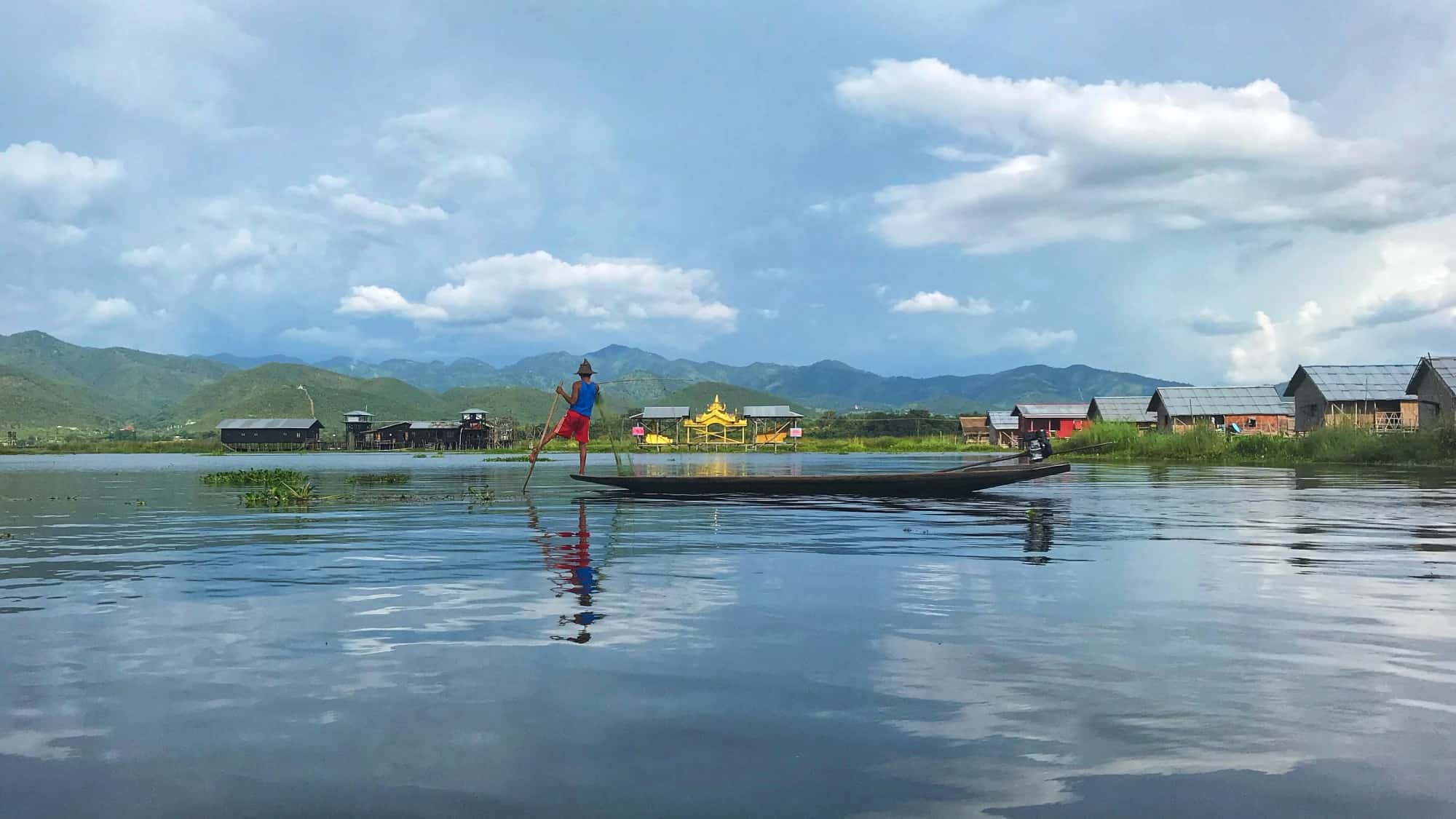
After 50 years of isolation and oppression, Myanmar (formerly Burma) opened up to the rest of the world a few years ago and became a jewel for tourism. The country that used to be the least visited in South Asia became one of the hottest destinations in 2016. Like frozen in time with its thousands of golden pagodas and temples tended by monks, people wanted to experience it before it changed. Quickly, the country developed everything tourism needed: hotels, tour operators, ATMs, airlines, etc.
Pin this for later
However recently, violent clashes between the Rohingya Muslims and the government forces in Rakhine State has made the headlines, defined as ethnic cleansing by the United Nations.
So is it ethical to visit Myanmar? Would going there condone the government’s policies? Some call for a boycott of the country, however we could argue that this would mostly harm locals who, thanks to the recent tourism boom, get their income from travelers. This could, instead of impacting the government, create a loss of jobs and make the population suffer (most of the population having nothing to do with the actual crisis). Instead, doing your homework to make sure you travel without ending up giving money to the former junta military members could be an alternative.
A Little Bit Of Context
Tensions have been existing for a long time
Early 2017, there was 1.33 million Rohingyas (according to the Immigration Ministry) living mainly in the Rakhine State (West of the country), which is the most remote, densely populated and poorest area of the country.
While they have been living there for generations, they were still considered “immigrants” from the Indian subcontinent, and have always been denied citizenship by the government. Being Stateless means they cannot travel, get medical attention or getting married without an official permission, they are also most likely to face different types of persecution.
For several generations there has been tensions between the Islamic Rohingyas and the rest of Myanmar’s population, mostly Buddhist, and it has been only getting worse. There have been scattered attacks by Rohingya’ militants on police and Buddhist monks, and in August 2017, militants attacked government forces. This triggered a “clearance operation” by Myanmar’s security forces.
There is currently almost one million refugees who have fled to temporary settlements and camps along the border (according to UNHCR). The government forces have been shocking the world by their brutality, slaughtering men, women and children, and destroying their villages. Human Rights Watch reported 288 villages razed. International aid agencies have not been able to access the areas to deliver supplies as Myanmar’s government believes it would support terrorists.
About Aung San Suu Kyi
Aung San Suu Kyi is the daughter of an assassinated revolutionary leader. She co-founded the National League for Democracy (NLD) in 1988 and was then arrested and imprisoned for 15 years by the military junta.
She was released in 2010 and a year later the NLD stated they”would welcome visitors who are keen to promote the welfare of the common people and the conservation of the environment and to acquire an insight into the cultural, political and social life of the country.” In 2015 she was elected in Public Office as State Counsel. The World Bank described Myanmar as being “in a triple transition – from an authoritarian military system to democratic governance, from a centrally directed economy to a market-oriented economy, and from 60 years of conflict to peace in its border areas.”
Still, Myanmar is a non-democratically elected government, with 25% of its seats reserved to the military, which means corruption and human right abuses can keep going.
Since the Rohingya crisis started, there has been a lack of response from Aung San Suu Kyi, which has attracted criticism. Even if she does not have power over the military, she did not condemn their actions either which has placed her commitment to human rights in doubt.
Is It Safe To Travel In Myanmar?
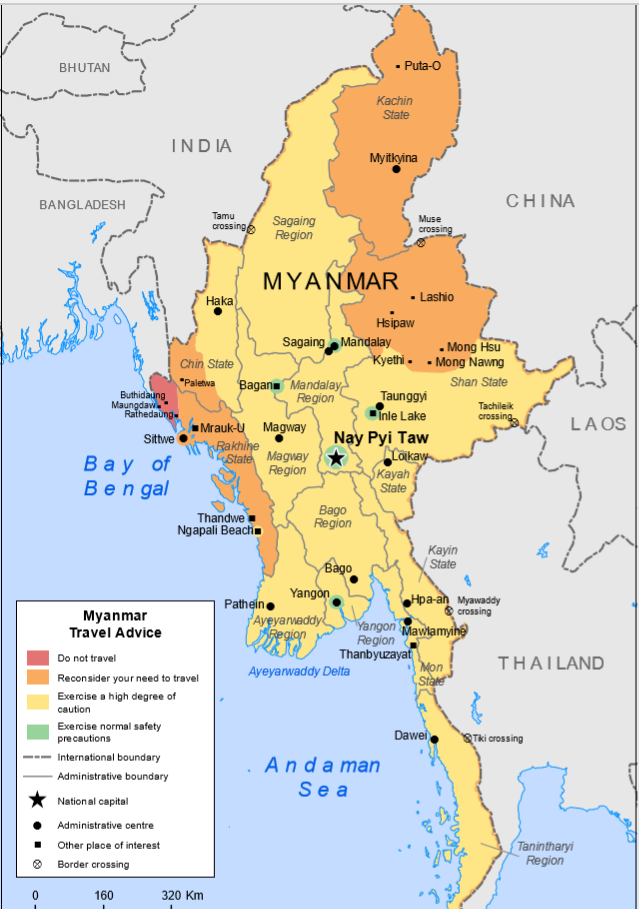
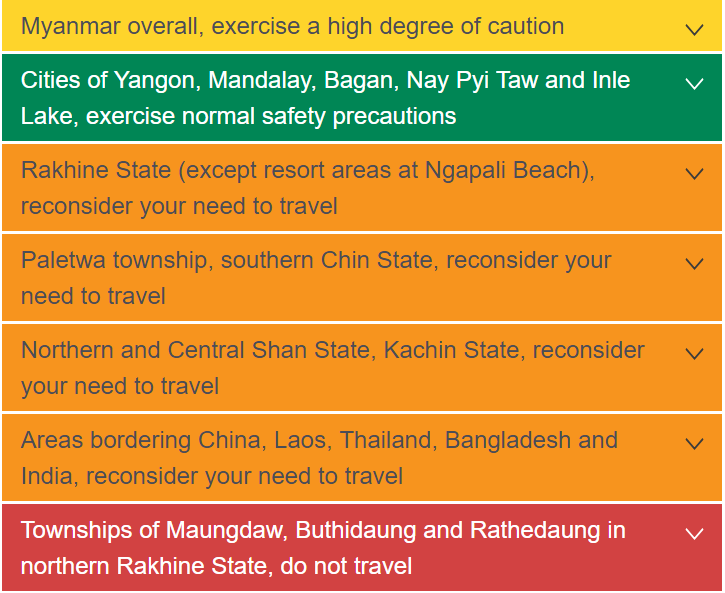
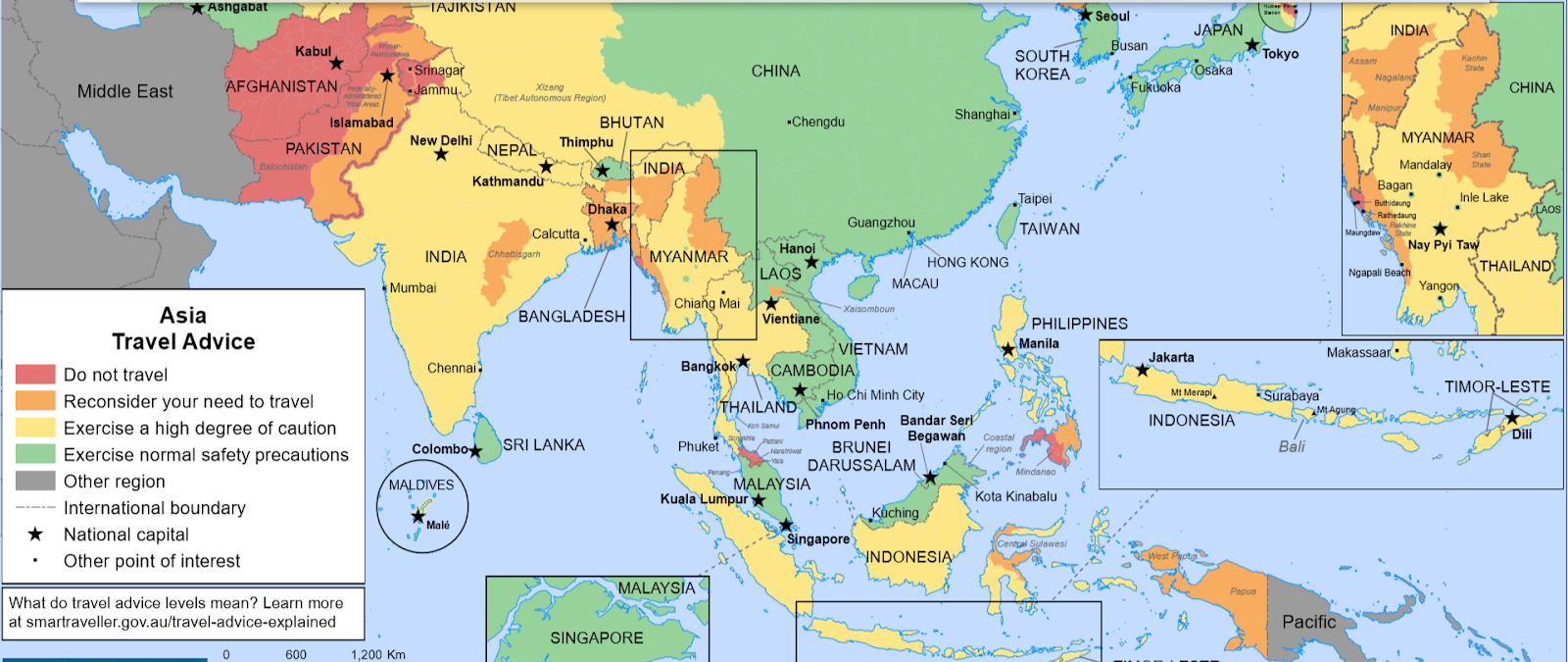
From our experience, travelling in Myanmar was extremely safe, but with a warning on some areas. You can find more details about the warnings here. The targeting of the Rohingya Muslims remains isolated in specific parts which are at a considerable distance from the main touristic areas. As per Smarttraveller.gov.au, most of Myanmar is safe enough to visit. Most of it is classified as a “high degree of caution”, however, many other countries have the same warning such a Thailand, Indonesia or the Philippines (France falls in that category too), which, I think we can agree, are okay. Myanmar falls under this category due to the uncertain security situation and the possibility of civil unrest. They advise to “pay close attention to your personal security at all times. Monitor the media and other sources about possible new security risks”.
Cities of Yagon, Mandalay, Bagan, Nay Pyi Taw and Inle Lake are classified as “normal safety precautions”, and to use common sense as you would in the United Kingdom or in New Zealand.
The Paletwa township (southern Chin State) is under “reconsider your need to travel” due to armed conflict. The Kachin State, Northern and Central areas of Chan State fall under the same category due to the armed conflicts including air strikes. The same warning applies for the areas bordering China, Laos, Thailand, Bangladesh, and India.
Finally, there is a “do not travel” warning on Maungdaw, Buthidaung, and Rathedaung (north Rakhine State). The rest of the Rakhine State is under “reconsider your need to travel”, except Ngapali Beach, where it is recommended to fly rather than drive.
It is recommended as well to avoid all political gatherings, protests, demonstrations, and street rallies as they may turn violent. Also do not take pictures of demonstrations, the police or the military.
Is It Ethical To Travel To Myanmar?
As tourists, we do have a huge responsibility as our actions will influence the whole industry in this particular country. For Myanmar, even more as the early years of opening up to the world and the perception and definition of tourism will path the future.
After the release of Aung San Suu Kyi in 2010, visitors who were “keen to promote the welfare of the common people” became welcome by the authorities.
However currently with the Rohingyas refugee crisis, most tourists have been wondering if travelling there would be funding the military operations and for this reason, if it was ethical to go at all.
Is Myanmar the only country in this situation?
We can ask ourselves if politics should influence tourists’ choice of destination. Indeed, if you are trying to pick your holidays depending on the ruler and his/her decisions, this might become very difficult.
Fancy seeing the Great Wall of China? The country’s government has a lot of work to do when it comes to Human Rights… It still got 142 million visitors in 2018. A safari in Zimbabwe? Police repression is said to be constant. And so many other countries have governments which haven’t been respecting Human Rights. If you are planning to go on holidays only in countries where you would be happy to support their head of state, the list will probably get very, very short.
As per Chris Leadbeater, “The essence of a country is not tied up in the face on the banknote, the statue on the podium or the voice parping from the lectern. It is tied up in the people who fill its towns and cities, in the food they serve, in the cafes and bars they populate, in the scenery they inhabit.”
All the same?
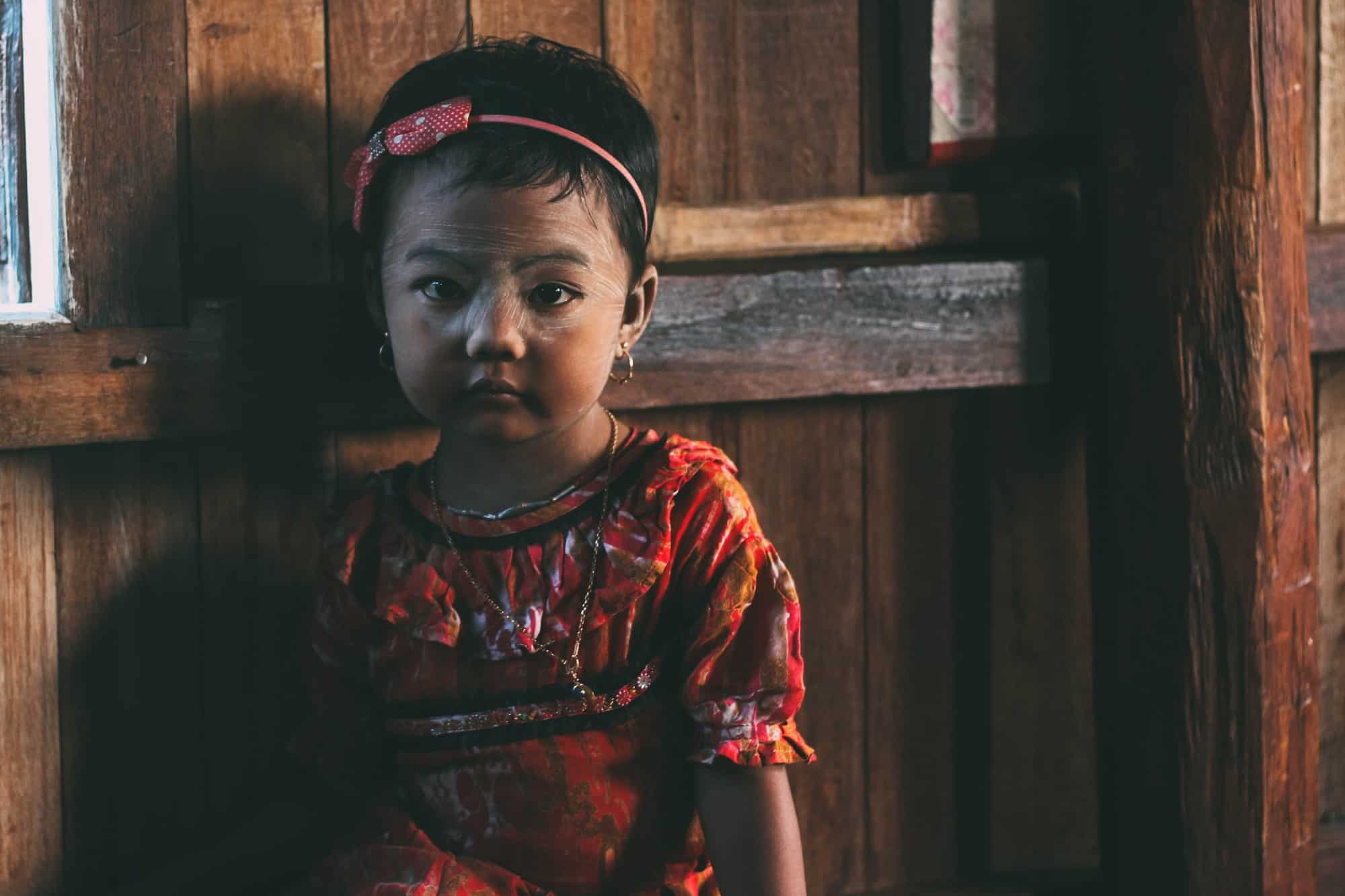
Also, another point of view is that the act of a minority does not make the rest of the country being responsible for it, nor they would agree with it. Should the action of terrorists make us treat the rest of the nation like terrorists as well? This applies to the Myanmar citizens: the terrible acts in Rakhine state does not imply that the rest of the population have the same views.
Overall in Myanmar, the tourism industry has been doing great in raising living standards. It has been benefiting local communities in many ways, and also permits to keep Myanmar visible internationally. Large parts of the country now relies on tourism and we believe avoiding it would have a profound impact on local people.
How To Ethically Travel In Myanmar
Educate yourself about the country, its history, its culture and beliefs. As a foreigner, you could easily offend someone without even realizing it!
Local instead of Government spending
It is impossible to completely avoid “giving” money to the government, as each business do have to pay taxes, as well as a license. However by spending smartly and locally, most of it can remain with the population.
Pick locally owned structures rather than bigger, government-owned hotels and restaurants. Try to stay in small family-run hotels or B&Bs, and eat in small restaurants or stalls. When looking for a place to spend the night, ask locals, look up on blogs, use Lonely Planet but maybe avoid bigger sites such as Agoda, Booking.com and other monster reservation companies which won’t be sorting them out. Same goes for shopping: go to the market, buy handcrafted goods instead of going to tourist shops, hire local guides, etc.
Do not take government tours, and privilege travelling independently, or use a private company owned tour. If so, make some research when choosing your tour company (use publications to find lists of private and government owned agencies).
The same applies for transports. Avoid government transportations when you can (this might not always be possible), and privilege buses, as well as trains, and if airlines pick private companies (try to avoid the official airline company).
Spend your money in several places instead of one. Sleep somewhere, eat somewhere else, shop somewhere else. Use the street stalls, private restaurants, family run businesses and B&Bs… More ordinary citizens will benefit from you this way.
Clothing and religion
Myanmar is a very religious country, and people do take their Buddhist beliefs seriously. Make sure to always respect their customs, monuments and sites. To enter any religious building and its area, you will be required to take off your shoes and socks, as well as cover your knees and shoulders. However it is very respectful to wear clothes that do cover the same areas most of the time. Lights trousers are a great option, you can also take the opportunity to get and wear the same “skirt” the locals wear (men and women). Depending on the region, the patterns and colour differ, which makes it also a handy and also beautiful souvenir.
-
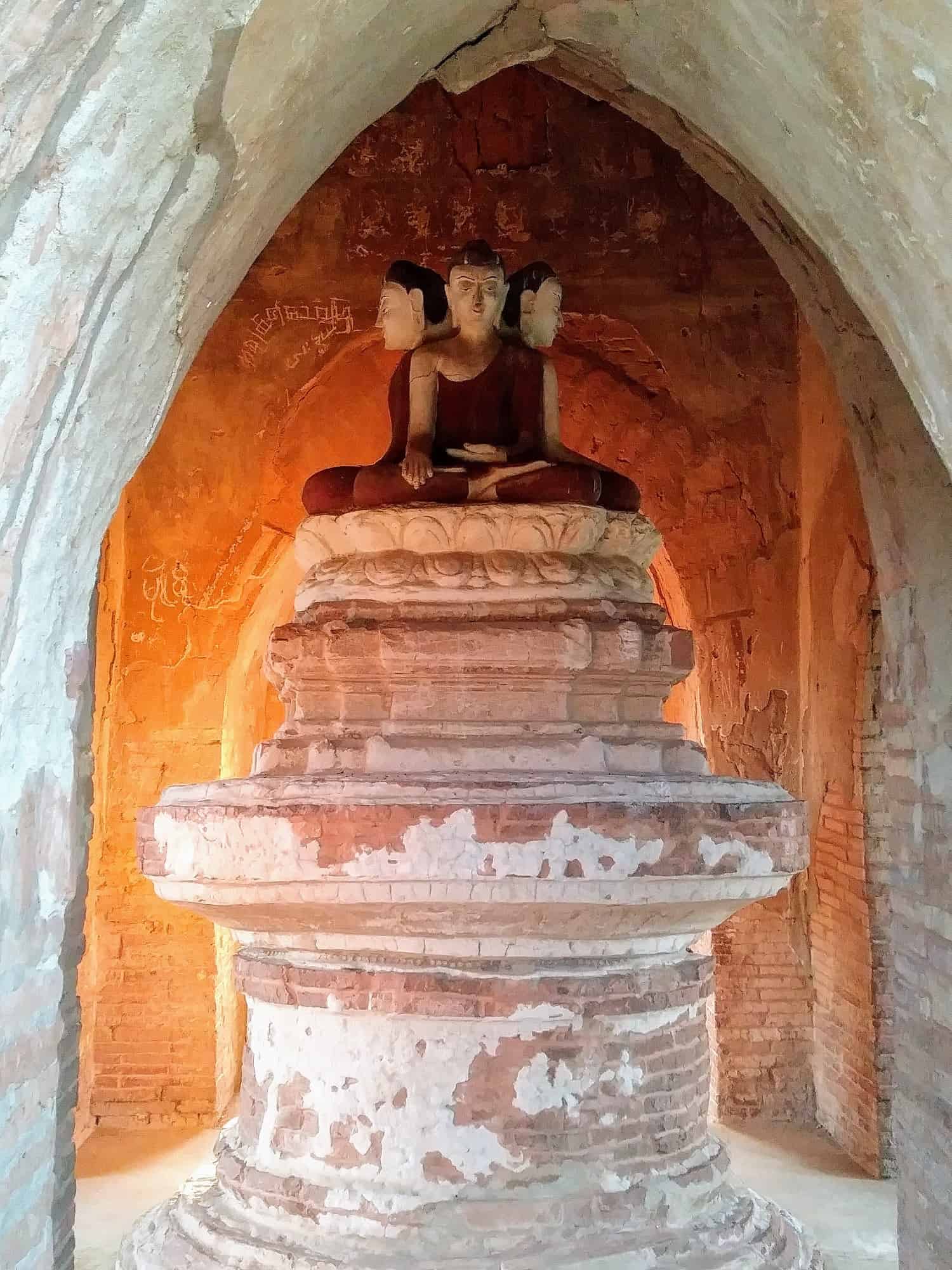
Detail of a Temple in Bagan -
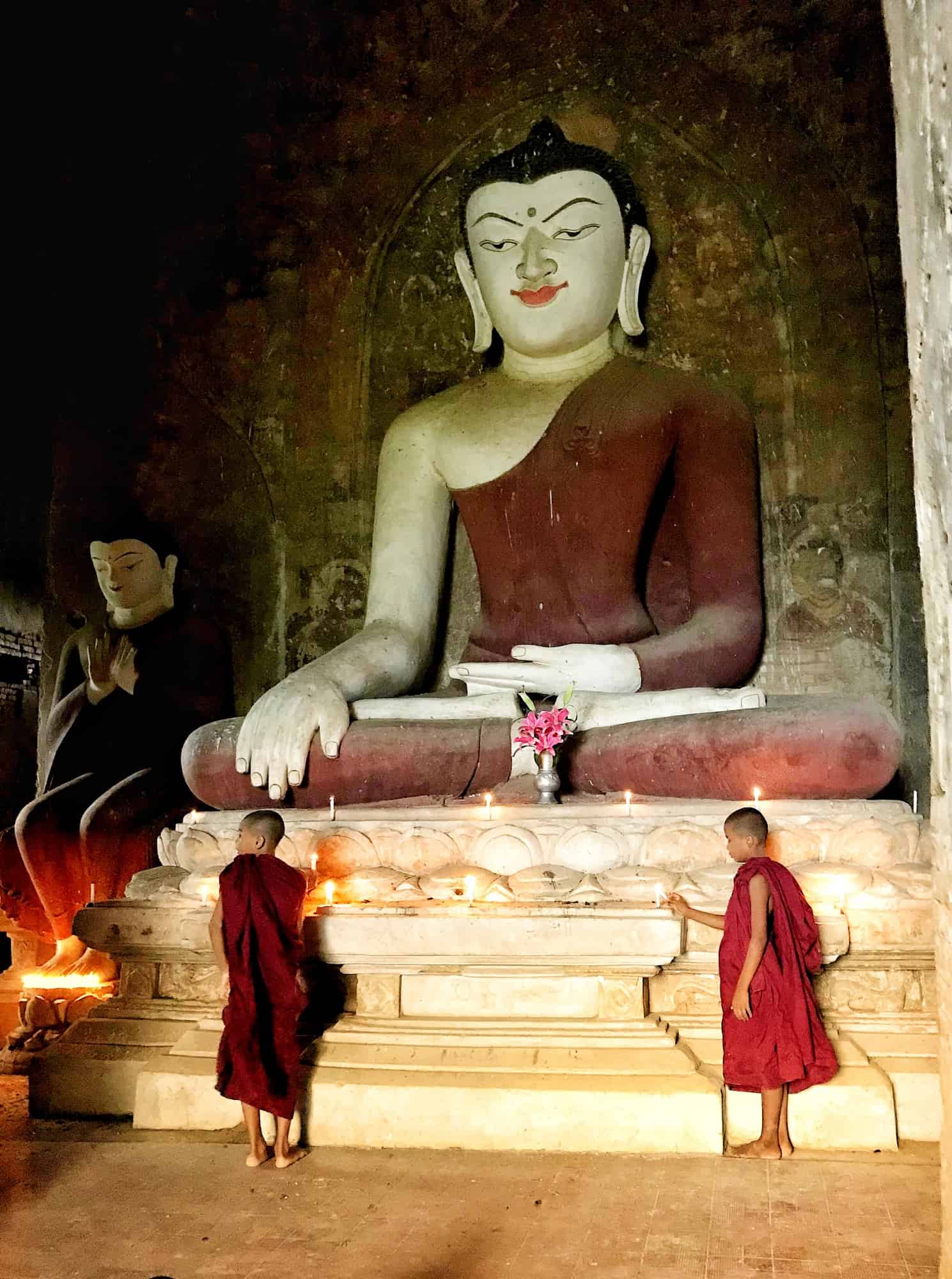
Monks in Bagan
Local tribes
You will find many tours taking you to see local tribes (this is valid also in many other countries such as Thailand, Indonesia, etc). However this is not always as ethical as you may think and can easily turn into exploitation.
The women of the Kayan Padaung Tribe for example ( also known as “giraffe women”) have been refugees in Northern Thailand for generations, and can also be found in Myanmar. They are sometimes found in built “villages”, considered by the UN as “human zoos”. Tourists do pay to visit them, however, they see very little of that money.
A Kayan woman even told The Bangkok Post that “The tourists think we are primitive people. The guides say they don’t want to see good roads or clean villages or anything modern, so we have to live like this to please the tourists”.
Around Inle Lake, they are sometimes “used” by tour operators for pictures with tourists. If you are going to visit local tribes, make sure you do have time to spend with them to understand their cultures and make sure they do get something in return.
People need to hear from you!
Myanmar politics are complicated and difficult. Locals may not be easy to talk to about politics, but if they are willing to it can be very enriching (just make sure to not impose your views). Those people grew up in a country closed from the rest of the world, where they only heard one side of the story. Outside voices help to engage in cross-cultural understanding, open them up to alternative ideas and challenge ideologies.
Saving their architectural history
For many reasons (earthquakes, looting, etc), Myanmar’s archeological sites have been suffering and their states have been degrading. By paying entrance fees to attractions and sites, you are encouraging proper restoration investment.
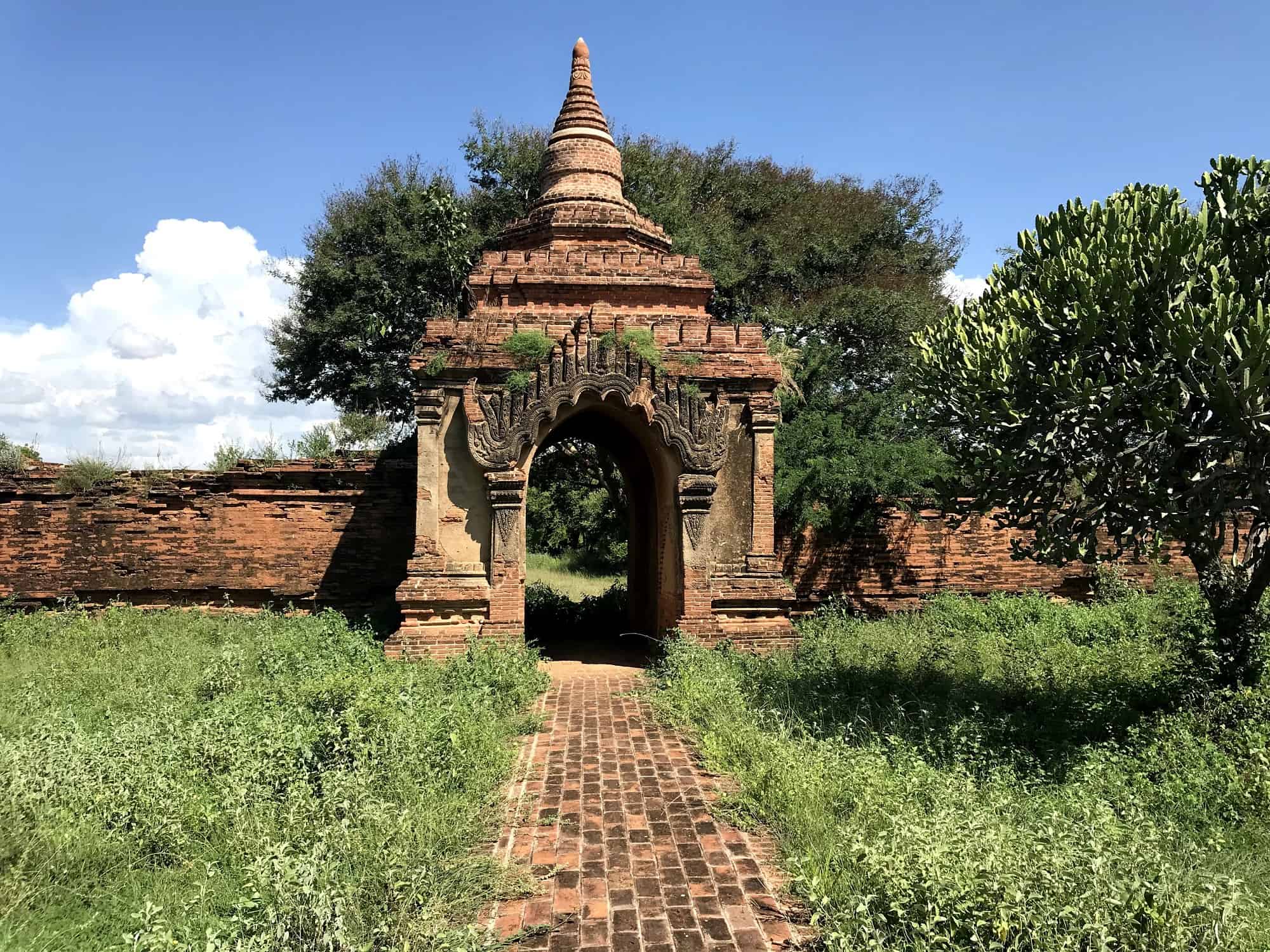
Rubies and gold
Avoid buying precious rocks mined in Myanmar, as they are controlled by the government.
Waste and water
Try to keep your waste to a minimum. This can be avoiding plastic bags, or using a water filter system instead of buying bottled water, etc. If you can, bring back home with you harmful waste to be recycled (such as batteries for example).
Regarding water, any tourist’s water footprint (as carbon footprint) is very high. In a world where water is a precious commodity, a hotel will put pressure on the local water supply, so be mindful! Privilege short showers, pick a hotel without a swimming pool (we know it is hot!), etc.
Bagan: the Old vs the New
People living in Old Bagan were suddenly ordered to move to a different area (now New Bagan) in 1990.
It was very difficult back then, and even today the situation is far from being resolved. You can read more about this story and how to be responsible while staying in Bagan by reading The Sad Story Behind New Bagan vs Old Bagan.
Extra Tips For Travelling In Myanmar
Money
We were recommended to bring dollars with us, but this information seemed outdated and we never had to use them! Everyone (restaurants, transports, and hotels) were using Kyats.
You will find plenty of ATMs everywhere, however, be aware that you will not be able to use your Kyats in any other country, so if you have some left over use it before leaving (exchange offices outside of Myanmar will not accept it).
How to not offend anyone by mistake
Do not touch anyone on the head! This would be interpreted as unrespectful as the head is the holiest part of the body.
Do not touch a monk’s robe.
Do not use your feet to point at things (ex: an article you want to buy on a market on the floor).
Do not display too much affection in public (such as kissing) as this would make people around you very uncomfortable.
Emergency phone numbers
- Firefighting and rescue services: 191
- Medical emergencies: 192 (Yangon General Hospital)
- Criminal issues, contact police: 199 or contact the local police
Always get a police report when reporting a crime.
In a few words
We believe that supporting ethical tourism in Myanmar would have an incredibly positive impact on everyone, and for many different reasons.
We disagree with the way its government acts, but we believe a boycott wouldn’t change it and would hurt the local population (without even being sure this would have any influence on the Rohingyas’ situation).
Go to Myanmar, meet its incredibly nice and welcoming people, but please just be aware of your actions, do it, but do it well!
Last updated